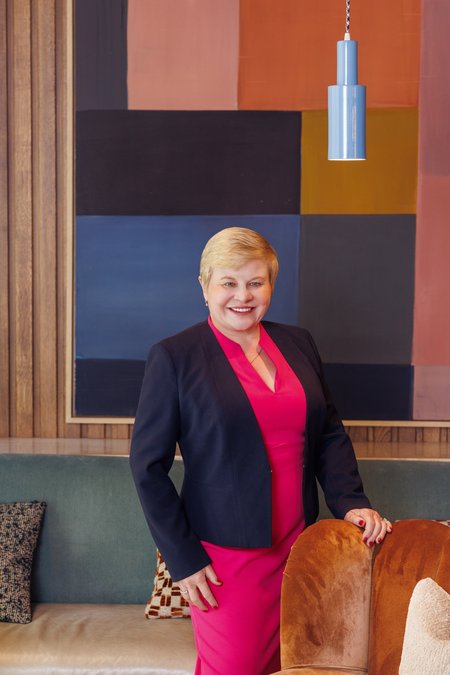
Lesley Francis
Local columnist
We have recently returned from the far north of the British Isles in the highlands of Scotland where we attended my nephew’s wedding in Inverness.
I have written before about weddings in the land of my birth, but this was a reminder of the unique traditions of Scotland.
Firstly, nearly all male guests wore kilts, although my all-American husband could not be persuaded to abandon his business suit with pants, which the British call trousers since pants means ‘underwear’ to the Brits. Kilts are a kneelength type of pleated wool plaid skirt woven into distinct tartan patterns which are a major part of the traditional national Scottish attire. Each clan or family group has its own tartan, each with its own unique pattern and combination of colors. Kilts are accompanied by a jacket and waistcoat, a simple white shirt and plain tie and of course the sporran: a type of pouch carried around the waist. During special ceremonial occasions such as a wedding, the sporran often carries a wee flask of Scotch Whiskey. This is finished off with special knee-high socks with flashes of tartan and lace up black shoes along with a kilt pin.
Occasionally a small dagger is tucked into the socks to complete the outfit.
What do men wear underneath their kilt?
This is a common question that any kilt-wearing man will get from non-Scots.
To my great relief, the majority of men today choose the more modest and hygienic option of wearing underpants, although some do occasionally “go regimental”, which refers to the 18th century military standard of wearing nothing at all underneath! Highland dress is still the uniform of Scottish regiments in the British army and kilts have been worn in battle as recently as the Second World War.
There are other tartan-related traditional Scottish aspects to the ceremony.
One involved loosely tying the hands of the newlywed couple together with a long piece of plaid cloth in a ceremony known as “handfasting”.
Handfasting has its roots in ancient Celtic tradition. When two people chose to be married, they were brought together to have a braided cord tied around their hands in the presence of a priest. This symbolic act merely acknowledged the pair’s engagement, which typically ran the length of a year.
After the year was up, the couple returned to the priest and either declared their intent to be married or declared that they weren’t a good match.
Both would then be free to choose another suitor and bride. It has become popular again in recent times, especially in Scotland, and is often incorporated into modern wedding ceremonies.
We were also able to spend some time exploring the city of Inverness during our trip to Scotland.
Inverness means ‘the mouth of the River Ness’ and is the most northern city in the UK which is often called the capital of the Highlands. It dates back to the 6th century AD and in 1040, Macbeth is supposed to have murdered King Duncan at his castle here. Early in the 12th century, King David made Inverness a royal burgh and it continued to grow in Medieval times.
During the 13th century, a bridge was built over the River Ness and a shipbuilding industry developed.
Inverness became a busy little port in the Middle Ages. The main exports were wool, fur, and hides.
For centuries there was a wooden fort at Inverness, but King David built a stone castle in about 1140.
The Middle Ages were a troubled and very violent time for Scotland with clan chieftains battling for land and wealth, and Inverness suffered fire, destruction and other disasters during this period. The castle was destroyed and rebuilt several times through to the late 1700s.
During the 18th and 19th centuries, Inverness continued to develop with the building of a quay and growing brewing and whiskey distilling industries. When the railway reached Inverness in 1855, it boosted the town because it made it much easier for tourists to reach Inverness and easier to transport goods to other parts of Britain. Shipbuilding, rope making, sail making, tanning and wool helped to sustain the economy and in 1921, the British government’s cabinet met outside London for the first time in history when it gathered in Inverness Castle. Tourism increased during the 20th century and continues to grow. Earlier this year, the modern castle opened as a visitor experience, so we decided to check it out.
Although the last of the original castle was destroyed in the 18th century, a castle-like courthouse was built on the site during the 1830s and a prison added during the 1840s. These buildings served as the city’s courts until 2020 before its $63 million renovation and creation of the Inverness Castle Experience.
This aims to tell the story of the Highlands through immersive storytelling, sensory exhibits, and there are panoramic views of the river, the city and the surrounding highlands from the castle roof terrace.
There is a lot more information at www. history.com and www. britannica.com I will leave you with a quote from famous Scottish actor, Sean Connery, who was the first to portray James Bond in the 007 movies: “The kilt is my refuge, my home.”
God Bless America and Bonnie Scotland (Scottish for ‘Scotland the Beautiful’)!
Lesley grew up in London, England and made Georgia her home in 2009. She can be contacted at lesley@lesleyfrancispr.com or via her PR and marketing agency at www. lesleyfrancispr.com.