By Paul Kasko, Lucille Lannigan from the Effingham Herald
EFFINGHAM COUNTY, Ga. – Coastal Georgia communities that spent years debating warehouses may soon face a new industrial question: Are data centers a better alternative — or an even bigger threat?
Advocates say the facilities bring tax revenue, infrastructure investment, and fewer trucks than traditional logistics hubs. Critics warn they could deepen water shortages, strain power systems, and accelerate the loss of forests and wetlands in a resource-vulnerable region.
There are no current public data center proposals across Bryan, Bulloch, Effingham, and Liberty counties. However, some leaders are discussing frameworks for future proposals. Bulloch County commissioners recently extended a moratorium on data centers and are discussing an outright ban.
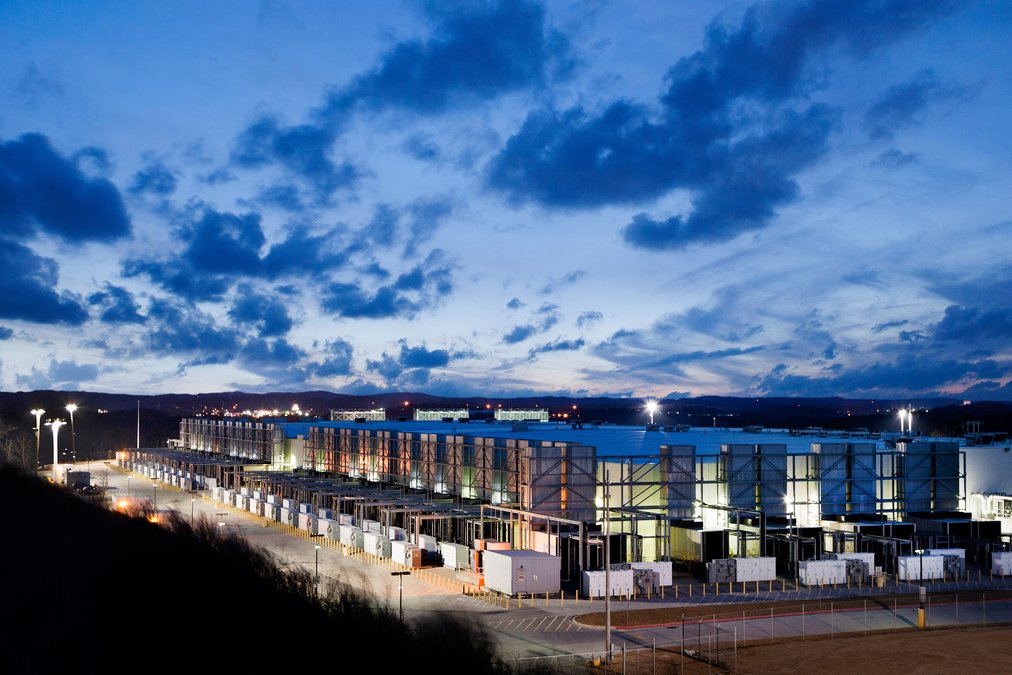
Data centers are physical facilities that house thousands of computer servers and networking systems. Some are small localized operations, while hyperscale campuses can stretch from 500,000 square feet to several million.
Effingham County already has around 30 distribution companies of varying sizes operating within the county. Both warehouses and data centers would largely compete for the same industrially zoned land parcels, according to county development leadership. If industrial growth is inevitable, which model leaves communities with fewer long-term costs and greater long-term benefits?
Water vs. traffic
Water usage and availability in southeast Georgia sit at the center of the debate.
Jeff Beauvais, the north coast advocate for One Hundred Miles, a coastal Georgia advocacy nonprofit, said Effingham County and much of Coastal Georgia already sit inside the state’s groundwater “red zone,” where withdrawals from the Floridan Aquifer are heavily restricted because of saltwater intrusion risks.
Beauvais said the closure of the International Paper mill near Savannah allowed the aquifer to rebound significantly. But he fears that recovery could quickly disappear if large industrial users — including data centers — begin tapping groundwater supplies again.
“Our position is that groundwater should be reserved for the highest and best use, which is drinking water in municipal systems,” Beauvais said. “But some of these industrial users are looking at it and saying, ‘It’s recovering. We have 12 million gallons a day of groundwater that’s freed up. Let’s use that for industrial water use.’”
Data centers can consume millions of gallons of water annually for cooling systems, though operators increasingly rely on recycled water, closed-loop systems or air-cooled technologies. Warehouses generally use far less water but bring another set of impacts: truck traffic, road expansion, and sprawling paved surfaces.
According to the Institute of Transportation Engineers, a 1 million-square-foot warehouse could generate roughly 690 vehicle trips per day compared to about 120 trips for a similarly sized data center.
For some communities, those trade-offs have already shaped economic development strategies.
Breezy Straton, president of Elevate Douglas Economic Partnership, said officials intentionally pursued data centers over logistics facilities after the 2008 housing crash left the county searching for new tax revenue without overburdening roads and schools. Google first brought a data center to the county in 2007. The county now has eight data centers functioning “fully online.”
“Data centers and warehouses take up roughly the same amount of space,” Straton said. “For us, it really was about diversification and expansion of a tax base without overburdening those essential services that a community needs.”
Wetlands, heat, and community identity
But opponents argue the debate extends far beyond traffic counts and tax revenue.
Beauvais said warehouse construction has accelerated wetland destruction and flooding concerns.
“If you clear a wetland and put up a massive warehouse and concrete parking lots, that’s a ton more impervious surface,” Beauvais said. “People consistently talk about flooding issues getting exacerbated when warehouses go in next to them.”
He also warned about heat-island effects caused by large expanses of pavement and the visual transformation of once-rural communities. Beauvais said many of those same concerns would likely accompany large-scale data center construction.
Isaiah Scott, an Effingham County native and founder of Scott’s Wild Bird Preserve, said it has been “disheartening” to watch forests and wildlife habitat transformed into warehouse corridors.
Scott pointed to widening roads, increased truck traffic, and clear-cutting as visible signs of how rapidly industrial growth has reshaped parts of Effingham County since 2021.
He said he does not want to see more warehouses or a data center come to his hometown.
“If we continue to permanently change the biodiversity landscape that we have, we’re going to be losing species and increasing the likelihood of extinctions,” he said. “Land tells stories. Whenever we develop and have big tech companies come in and build on top of our land, we’re losing that.”
While Scott opposes both types of development, he said data centers could ultimately have broader consequences because of their massive energy and water demands layered onto continued land clearing.
Jobs and economic value
Supporters of industrial development, however, argue that the economic calculations are more complicated.
One of the major arguments against data centers is that they employ fewer full-time workers than manufacturing facilities.
Effingham County officials estimate the average local distribution center employs around 70 full-time workers across positions ranging from forklift operators and inventory specialists to maintenance technicians and logistics coordinators. Transportation and material-moving occupations in the county average about $21.56 per hour, according to Chmura Economics.
Data from Chmura Economics also found that transportation and warehousing companies spend roughly $24.5 million annually with Effingham County businesses.
Local distribution employers also form community partnerships. These industries often partner with technical colleges, workforce boards and K-12 systems to help introduce students to logistics careers.
An analysis for the Georgia Department of Audits and Accounts, released in December 2025, reported the average value for each data center project across the state approached $2.3 billion, leading to an average of nearly $28 million in annual property tax proceeds per project.
Critics of data center incentives, however, argue headline tax revenue figures can sometimes obscure how long it takes communities to receive the full benefit of those projects.
Large data center developments often receive temporary property tax abatements or sales tax exemptions tied to equipment purchases and infrastructure investments. Supporters say those incentives help Georgia compete for major technology projects and can still generate significant long-term tax revenue for counties and school systems. Opponents argue that communities sometimes wait years before seeing the full financial return while still absorbing infrastructure and environmental impacts.
The structure and length of those incentives can vary widely by project and by local development agreements.
ECIDA officials said local discretionary incentives are evaluated on a case-by-case basis. Projects are reviewed on a variety of factors, including projected job creation, capital investment, quality and types of positions created, anticipated wages, and overall community, economic, and fiscal impact.
Employee numbers at data centers vary widely depending on the operation, often employing anywhere from a dozen to 50 full-time staff.
Beauvais said Georgia’s tax incentives for data centers require relatively few permanent positions even for massive facilities. He said some companies rely on traveling maintenance teams instead of hiring locally.
Straton said data center job counts are often misunderstood because many workers are contractors rather than direct employees. She also said employee numbers change because data centers come online in phases.
Electricians, HVAC technicians and security personnel may work full time at a data center while technically employed by third-party firms.
She said many of those positions in Douglas County pay at least $75,000 annually and often do not require four-year degrees.
“They’re specialized jobs,” she said, “but many are tied to the trades.”
The AI boom — and what happens after
Even supporters acknowledge another question hovering over the industry: longevity.
Questions about longevity hang over both industries. Beauvais said the current data center construction boom is heavily tied to generative artificial intelligence investment, which some analysts increasingly compare to a speculative bubble.
“What happens in five to 10 years if they don’t need as much computing space as they have built out?” he said.
Beauvais said local governments should consider requiring decommissioning bonds or escrow accounts before approving data center projects.
He said warehouse development also carries long-term uncertainty tied to projections for continued Port of Savannah growth.
According to data gathered by the ECIDA, most local distribution center leases run five or 10 years and renew at rates between 70% and 75%.
“Do I believe the Port of Savannah is going to stick around longer than some of these data centers?” Beauvais said. “It’s the third busiest port by container traffic in the U.S., but is it going to continue to grow exponentially indefinitely? No. No growth ever does.”
Hurricanes and infrastructure risks
Beyond economics and environmental concerns, critics also question how resilient data centers would be along Georgia’s coast, which is becoming increasingly more vulnerable to severe storms like hurricanes.
Beauvais questioned whether data centers near Georgia’s coast could withstand major storms and how utilities such as Georgia Power – the largest electric utility company in the state – would prioritize power restoration after disasters. Georgia Power recently expanded its grids, adding nearly 10 gigawatts of capacity for data centers. The company also put in measures, ensuring that the large energy users pay upfront for the local infrastructure they’ll use, in an effort to keep utility rates low for everyday customers.
Straton said communities can impose stricter design standards and infrastructure requirements. She said Douglas County requires data center operators to fund their own utility upgrades, including substations and water infrastructure.
She also emphasized that local governments still control zoning and land-use decisions.
A debate over the future of growth
Ultimately, Beauvais, Scott, and Straton agreed on at least one point: Local communities should play a larger role in shaping how future growth unfolds.
Beauvais called for more creative reuse of vacant industrial spaces. He also said residents often feel powerless during rezoning hearings and public comment sessions.
“I think local governments need to be a lot more responsive to constituents when it comes to development,” he said. “Can we form advisory councils or committees with some real power to oversee these things?”
Scott argued that development should prioritize already disturbed land instead of clearing forests and wetlands.
“Think about where people live and don’t put developments next to communities and people’s homes,” Scott said. “I’d just like to emphasize that we don’t need warehouses and data centers.”
Straton said that although data centers may benefit some communities, they may not be right for all of them.
“You really have to understand the priorities of your community and then really be open to exploring what that looks like because you have to have economic development,” she said. “You don’t want the tax burden to be solely on the homeowners. You need balance in that.”