Editor's note (May 14): The LCDA requested a meeting with the EPD, Skidaway and GSU Institute for Water & Health to understand and address the Blanton/Savidge report. They hired the Water Environment https://water-ec.com/about-us/ out of South Carolina to study and address the concerns of the report.
The WEC reported back in a letter, dated May 11, that the study found that the Laurel View River system is well-mixed and continuously flushes downstream, making long-term trapping or landward movement of discharged constituents unlikely. Circulation studies and proposed MBR treatment with disinfection indicate the discharge would produce high-quality effluent with minimal ecological impact on surrounding marsh areas.
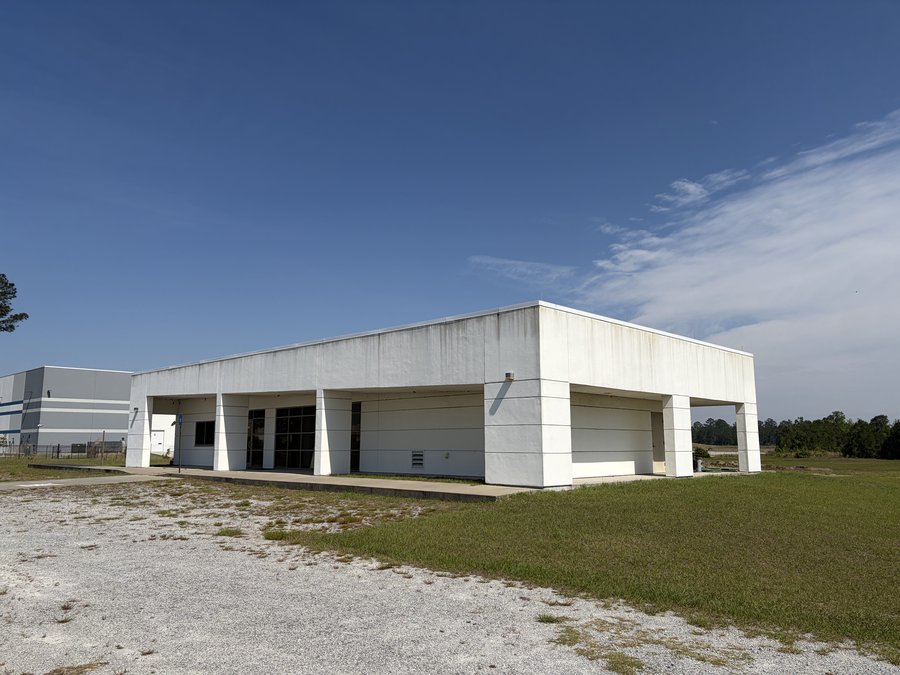
MIDWAY – The Liberty County Development Authority is reviving a decades-old wastewater treatment plant project to meet growth demands in the county’s eastern half.
Phase one of the project is estimated to cost $32.5 million, building a modern, centralized treatment plant at the Tradeport East Industrial Park in Midway, GA. Project leaders say the plant would use advanced treatment technology capable of producing near drinking-water-quality effluent. But the proposal has sparked opposition among residents in east Liberty and south Bryan counties because the preferred plant system would discharge treated wastewater into the Laurel View River, a small tidal waterway connected to the Jerico River system.
The proposal comes as Midway and the LCDA approach wastewater capacity limits. The LCDA currently relies on 200,000 gallons of wastewater capacity from the city, with only about 150,000 gallons remaining for industrial recruitment and development.
“If east Liberty County … is going to grow — whether it's industrial, commercial, or residential — you’ve got to be able to treat the waste,” said Tony Rojas, a principal at TPR Consulting.
Project Background and why now
Plans for the wastewater plant date back nearly 20 years to the early development of Tradeport East. Georgia EPD studies were completed, and portions of the infrastructure were constructed before the project stalled during the 2007 recession. Existing systems were later rerouted to the Midway treatment plant.
“There’s a lot of infrastructure in the ground that’s already functioning,” LCDA President and CEO Brynn Grant said.
Grant said the lack of wastewater capacity is tied to economic stagnation in the county, which has seen a decline in median household income over the last few decades. Grant said economic opportunity lies within the county’s “front door” or exit 76 along I-95. However, the LCDA said it frequently turns down prospective industries – some that would bring hundreds of jobs – because of water and wastewater limitations.
“This is something the development authority is committed to changing,” Grant said. “We want to increase the standard of living for people in our county. We want the opportunity to expand economically in a smart way, and we know that wastewater is fundamental to that.”
The proposed facility would initially serve Tradeport East and the planned Laurel View mixed-use development, a 5,000-acre project near Exit 76 on Interstate 95. The plant would use membrane filtration, chlorine treatment, and UV disinfection to treat wastewater.
“It is basically the highest quality water you can get,” Chris Stovall, project engineer with Thomas & Hutton, said. “This is the cleanest water you can produce.”
Processed organic waste will be trucked to a landfill. Reuse of the treated water is planned for the irrigation of the Laurel View Development. Project leaders said it will also be marketed to industries needing water for HVAC cooling within their facilities. Grant said the goal is to “reuse as much as possible.”
The remaining treated wastewater will be discharged into the Laurel View River through a diffuser system roughly 40 feet beneath the riverbed to improve mixing.
“The studies show it is blended together very well,” Stovall said.
Though the facility is permitted for up to 3 million gallons per day, project leaders said the plant would begin with much less — likely around 500,000 gallons daily during its first several years.
Georgia EPD studies concluded the discharge would have an insignificant environmental impact. According to those studies, approximately 258 million gallons of freshwater already enter the tidal basin daily through rainfall, runoff, creeks and groundwater. At full capacity, the discharge would represent about 1.16% of that total.
However, residents along the river are wary of the near-20-year-old study and worry about potential harm to the river’s ecosystems.
“We want to grow responsibly”
Clarissa Zabarac and her husband moved to the Isle of Wight in 2000, drawn by affordable waterfront property and the quieter pace of life outside Savannah.
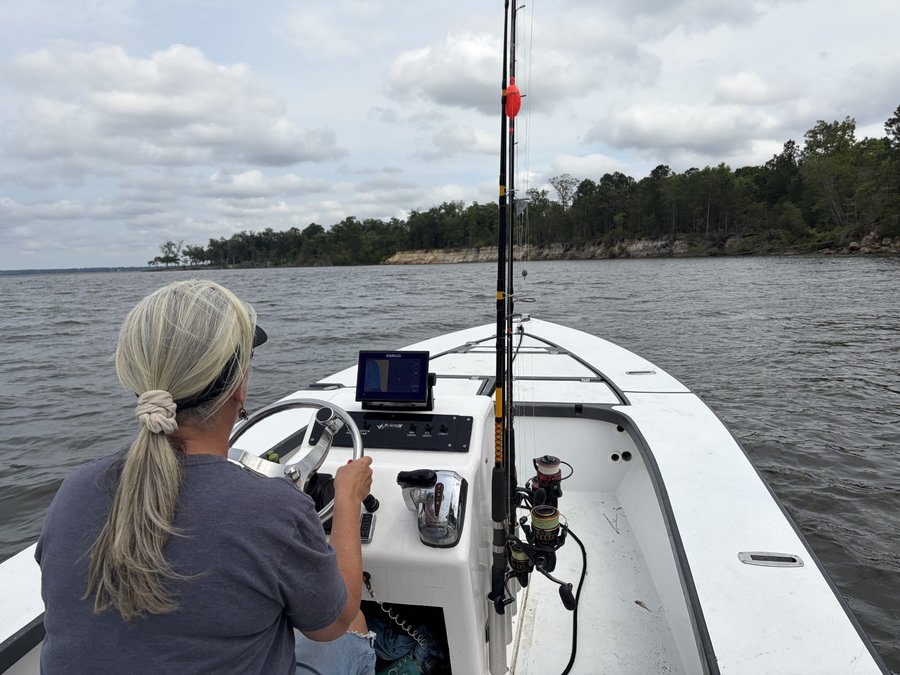
Her family is out on the river at least three days each week, marveling at the vibrant ecosystem and joining others on the weekend for a day on the sandbar that sits almost directly at the plant’s potential discharge point. She called the area a “nursery” for dolphins and tarpon that give birth within the tidal basin.
Today, her husband and son make a living from commercial crabbing along the Jerico River system. Among her neighbors, Zabarac knows of at least eight crabbers making a living from the water, including the famous Sunbury Crab Co. Some families have worked these rivers for generations.
“My husband makes his living in these waters,” she said. “I think that should be protected.”
Residents opposing the project argue the environmental studies supporting the permit are outdated and do not reflect how the estuary has changed over the last 15 to 20 years, with shifting sandbars and altered channels throughout the estuary. In just 24-hours, high and low tides create two entirely different landscapes along the river.
“This cut-through was tiny in 2009,” Zabarac said while navigating the marsh-lined river in her Carolina skiff. “It may not have even existed then.”
Residents also question how adding millions of gallons of freshwater could affect what they describe as a largely saltwater ecosystem.
“I cannot understand how they think they can fit 3 million gallons of fresh water into here and it not affect everything,” she said.
Wallace Holland, a Bryan County resident with a background in fisheries biology, lives along the riverside Waterford Landing neighborhood. He said the Jerico and Laurel View systems function more like tidal basins than free-flowing rivers.
Holland pointed to the 2009 Georgia EPD dye study that tracked how water moved through the estuary. Holland said the study found it took about 21 days for discharged material to move outside of the basin. A 2009 report from Dr. Jack Blanton and Dr. Dana Savidge, then faculty with the UGA Skidaway Institute of Oceanography, found concern in the EPD study, pointing out that the river’s winding channel and nearby marshes could slow flushing and trap treated effluent in recirculating tidal patterns for extended periods, particularly near a “stagnation point” identified close to the proposed discharge location.
Savidge wrote in an email that the findings in this study haven’t changed 17 years later. She maintained that a “closer examination is warranted of circulation patterns, channel morphology and the density of salt-marsh grass where the effluent may be retained.”
Holland said the coastal marshes of Georgia are among the most biologically productive ecosystems on the East Coast. He said he worries adding large volumes of freshwater effluent into a saltwater basin could alter the food chain that supports shrimp, crabs and fish populations.
“We’re not trying to stop growth at all,” Holland said. “Growth is inevitable. We just want it done responsibly. I feel very strongly about this because this is where my family's going to live after I'm dead and gone.”
Susan Inman, the mid coast advocate with One Hundred Miles, a non-profit dedicated to preserving Georgia’s coast, said Liberty County leaders should seriously evaluate routing wastewater to the already industrialized North Newport River system, west of I-95, instead of introducing new discharges into the comparatively less disturbed Laurel View estuary.
Inman also warned that the broader Laurel View development — approved for more than 5,400 residential units — could significantly increase stormwater runoff and alter nearby marsh systems.
“Building approximately 5,000 new homes, combined with increased industrial activity, will dramatically increase impervious surfaces and runoff volumes—only exacerbating the stormwater flooding and runoff issues already facing residents on nearby properties,” she wrote.
“This level of development will permanently alter water quality and hydrology in the surrounding public waterways and marsh systems.”
Zabarac said the opinions of nearby community members are mixed when it comes to increased development. She said many came to the Isle of Wight to “get away,” while others welcome the potential for new restaurants, grocery stores and jobs.
Zabarac, who has worked decades in construction, said she understands the economic pressure and potential driving development.
“We’re not against growth, and we’re not trying to exaggerate the issue,” she said. “We’re just asking them to do better studies, more current studies, and seriously look at alternatives.”
Concerned residents are organizing meetings and reaching out to lawmakers with concerns. A “Save the Laurel View River” Facebook group accumulated nearly 600 members who share resources.
Leaders argue freshwater inflow is critical for coastal health
Project leaders maintain a firm stance that the potential discharge is not only safe, but would actually improve environmental protections in Liberty County and along the coast.
Phil Odom, the Liberty Consolidated Planning Commission chairman, said the estuary is naturally brackish rather than purely saltwater. He said the discharge point sits near an existing mixing zone where freshwater and saltwater already interact. Odom said freshwater inflows are necessary to maintain marsh ecosystems and counter increasing saltwater intrusion along Georgia’s coast.
“It actually needs more fresh water than it’s getting currently,” Stovall said, pointing to a 2002 salad marsh dieback, which was linked to severe drought.
Rojas said this new wastewater treatment plant would also move east Liberty away from widespread septic system use, which presents more environmental risks, especially with the soils and water table levels along the coast.
The LCDA has begun the process of hosting public meetings for the project. Project leaders met with the Midway City Council in a public meeting to discuss the project on May 6.
“This is a very important matter … it’s for the city of Midway moving forward,” Midway Mayor Malcolm Williams, said during the meeting. “Midway we have a lot of great things going forward right now. I feel that we’re a little bit behind right now on some things, but we want to get moving forward.”
The LCDA will begin hosting open houses on the project in June. More information can be found at https://comegrow.global/milestone-moment/.