RICEBORO — As the Liberty County Development Authority weighs a new potential discharge point for its Tradeport East Water Reclamation Facility, Riceboro residents are asking: If people along the Laurel View River objected to treated wastewater entering their waterway, why should the North Newport River be any different?
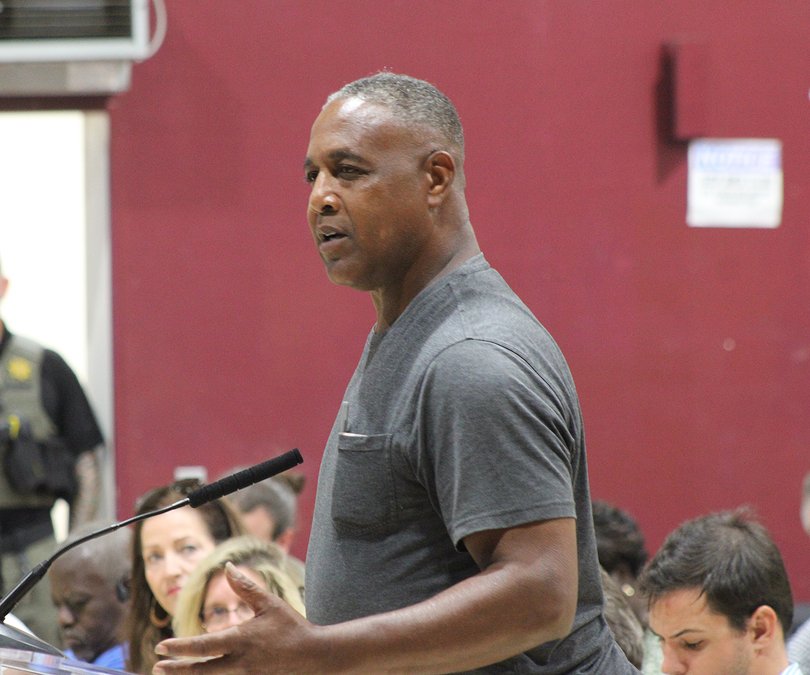
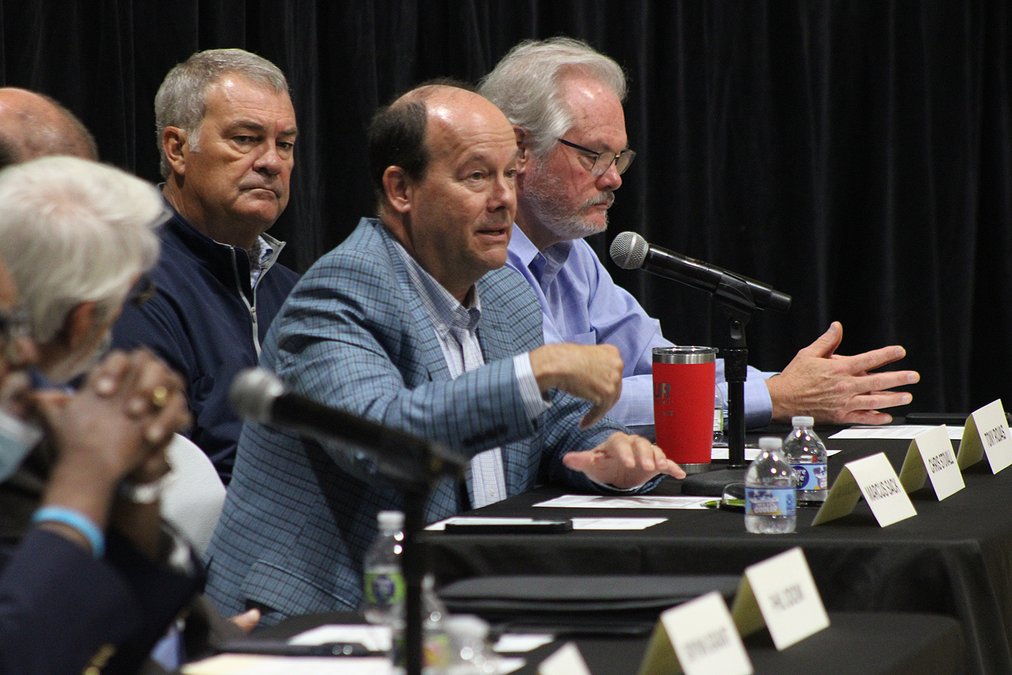
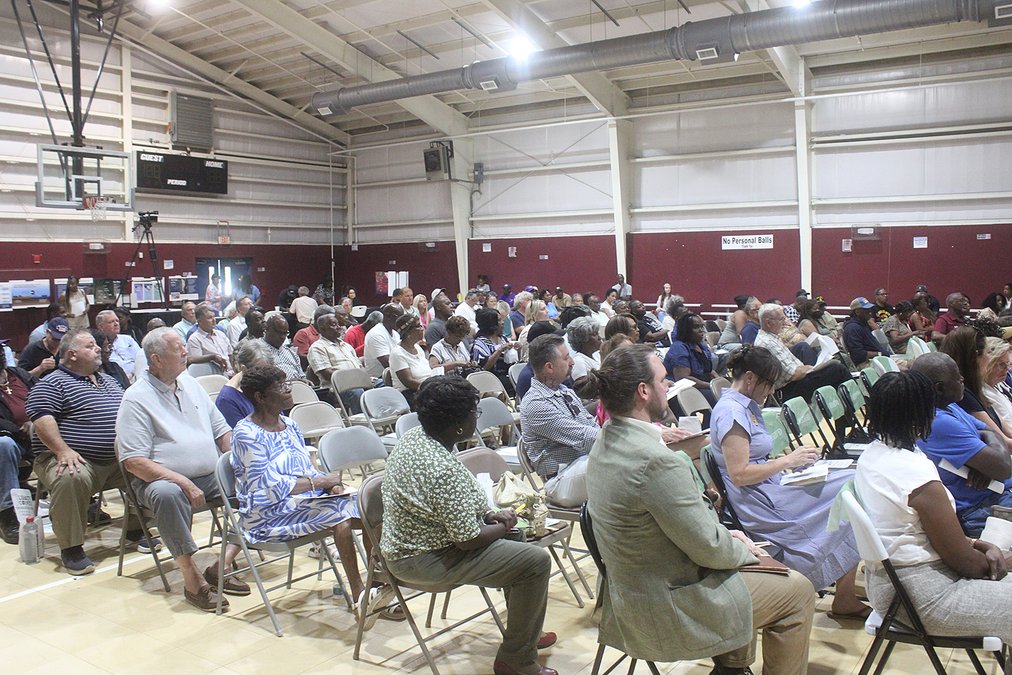
That question loomed over a public meeting, Monday evening, at the Riceboro Youth Center, where about 200 residents gathered to learn about the project and voice concerns about the future of a river that has long been intertwined with the community's industrial past.
The LCDA is now evaluating the North Newport River as a possible discharge location after months of opposition from residents near the Laurel View River, the project's original focus.
Officials stressed that no decision has been made and the authority requested a wasteload allocation from the Georgia Environmental Protection Division, a process expected to take six to nine months.
Questions from residents ranged from long-term water quality monitoring to fishing safety and what kind of growth the water reclamation facility would attract.
"We're just as passionate about the North Newport River," Cerenity Morris, a lifelong Riceboro resident, said, prior to the meeting. "This is our home. If these people don't want it in their river, why does that make it okay for it to be in our river?"
Officials said the facility would undergo regular daily, weekly and monthly monitoring required under state permits. The LCDA also recently announced new water quality monitoring partnerships with both the Ogeechee Riverkeepers, an environmental nonprofit, and Water Environment Consultants, a South Carolina-based firm.
Why the North Newport?
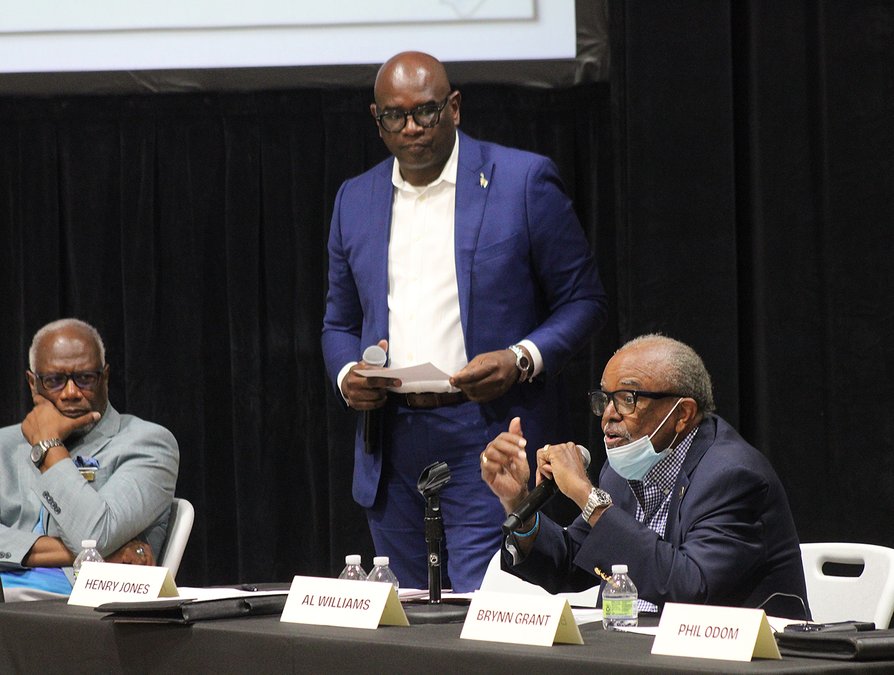
LCDA Chief Executive Officer Brynn Grant said evaluating the North Newport became necessary because conditions have changed since planning for the wastewater facility began about 20 years ago.
"It was believed the North Newport wouldn't be an option because there were already large industrial discharges there," Grant said. "Circumstances have changed, and it was our responsibility to evaluate every potential option."
The main changed circumstance is the closure of the International Paper Mill in September 2025. It had been in the community since 1968 and was permitted to discharge treated wastewater into the North Newport River. While the mill is closed, its permit remains operable.
Grant said requesting a waste load allocation from the state is only the first step in considering the North Newport. If EPD determines the river could accept a discharge without harming the river, the authority would then begin environmental studies, routing analyses and engineering work before any decision is made.
The proposed reclamation facility would provide wastewater treatment capacity for existing industries at Tradeport East while supporting future development in northeastern Liberty County, including growth anticipated around Interstate 95's Exit 76 interchange.
During her presentation, Grant said the county lacks sufficient wastewater treatment capacity and warned that without centralized treatment, growth would rely increasingly on septic systems, leading to more sprawling development.
There are about 800 private septic systems along the Laurel View and about 100 along the North Newport.
"It is a need for public health. It is a need for the environment. It's certainly a need for the economy," Grant said.
Highest quality treated water and “de minimis” impact
The authority plans to use membrane bioreactor, or MBR, technology, which Grant said produces higher-quality treated water than conventional wastewater systems and represents the current industry standard. She said the quality of water discharged from the proposed MBR facility would be equal to or better than the existing river water.
The facility would be permitted to discharge up to 3 million gallons of this water into either the North Newport or Laurel View River, per day. However, project officials have emphasized that it would not reach that discharge capacity for at least 20-30 years.
The freshwater effluent would be dispersed through a pipe underneath the riverbed and about 30 feet below the surface.
EPD impact studies from 2009 showed that the discharged fresh water would have a “de minimis impact” on the Laurel View, or an impact so minor that it won’t cause adverse effects.
Still, residents repeatedly returned to concerns about their own river.
Riceboro's relationship with industry stretches back generations.
State Representative and LCDA Board Chairman Al Williams said when International Paper came to Riceboro, it “changed a lot of lives,” but residents weren’t a part of the process.
“When Interstate Paper came, not a soul in here had one say in where it was going and how it was going,” he said to attendees at Monday’s meeting. “You get a chance now to decide what comes … what’s good for Riceboro”
Along with International Paper, SNF, a chemical manufacturer, has been an anchor in the community for decades. It faced scrutiny over environmental issues in 2019, contributing to lingering skepticism whenever new projects involve local waterways.
Opponents of using the Laurel View as a discharge point pointed to the North Newport because it had already been introduced to freshwater effluent. Some claimed it “was already polluted.”
A healthy river
Morris said the pollution claims weren’t valid.
“There’s people that stay near the river, we eat out of the river,” she said. “It’s for recreational use, the same way the Laurel View River is.
Mikia Frazier, a lifelong resident, said she attended Monday’s meeting to understand how the proposal might affect future generations.
"I've lived in Riceboro for 29 years of my life, and I plan to stay because I love my community," Frazier said. "People fish there. They use it for recreation. If it's already polluted, let's not pollute it more. Let's figure out how we can get rid of the pollution that's already there."
The North Newport River is also the site for an ongoing oyster habitat restoration project from the Georgia Department of Natural Resources’ Coastal Resources Division.
The restoration team began their work in 2023, and Cameron Brinton, a marine biologist, said the project is showing encouraging results as restored reefs become self-sustaining and continue attracting new oysters.
Although pollution can contribute to oyster declines, Brinton said it hasn’t been a concern in the North Newport River. The primary drivers in Georgia oyster decline have historically been changes in freshwater flow and overharvesting rather than local water quality issues. He added that the North Newport River's tidal influence and saltwater conditions remain favorable for oysters, which play a critical role as "ecosystem engineers" by providing habitat for fish, stabilizing shorelines and filtering water.
Brinton said more research is required to fully understand if the introduction of freshwater effluent would have a significant impact on the oyster restoration efforts.
He said oysters are robust to changes in fluctuations in freshwater, and some amounts of salinity fluctuation kills the parasites that harm them. He said the restoration area is far enough from sea water.
“I would not anticipate even with a significant change in the amount of fresh water coming down the North Newport River that we would see it changing that habitat from suitable for oysters to unsuitable for oysters,” Brinton said.
Grant said Georgia EPD studies show the river is currently healthy despite its industrial history.
Chris Stovall, a project engineer with Thomas & Hutton, said treated water from the reclamation facility would also be higher quality than the industrial discharge.
"From a community perspective, we're used to the idea of industrial discharge in that system (North Newport),” she said. “On the other system (Laurel View), there's been no industrial discharge, so there's a perception that it's pristine."
Monday meeting in Riceboro is just the beginning
Frazier said she was worried initially that Riceboro only became an option after Laurel View residents mounted organized opposition, but she said hearing officials explain the project timeline helped answer some of her questions.
She said continued public engagement will be critical.
“I’ll definitely be at future meetings so I can track the progress and the final decision,” Frazier said. “I’m going to encourage my community to do the same.
Renea Miller, a Riceboro resident and wife of Riceboro City Councilman David Miller, said after Monday’s evening she’s feeling more hopeful about the water reclamation facility’s impact on Liberty County.
“I believe that it’s just going to promote growth for our area,” she said.
Mayor Chris Stacy said the meeting represented an important first step but acknowledged many residents likely left with unanswered questions.
"I was glad the citizens got a chance to come out and really get an understanding of how this whole plant works," Stacy said. "But I think a lot of people were still left unsure.”
He said he wished for more discussion on what happens if both rivers come back as viable discharge points.
“Which way would we go then,” Stacy said. “How would the decision be made?”
Williams said the water reclamation facility will contribute to the growth and flourishing of the entire county, including Riceboro.
“We are looking for anything that is environmentally good and good for the future of our citizens,” he said. “We don't want to have to visit these places in other counties. We can’t let jobs die on the vine, and we stop growing.”
Williams stressed no decision has been made. "We're going to follow the science," Williams said. "The decision will be driven by data.”
Now, the LCDA will wait for EPD's determination on the waste load allocation before deciding whether to pursue additional environmental studies. If the state finds the river unsuitable, officials said the county will continue evaluating other options, including the Laurel View River.