Pat Donahue, Coastal Courier
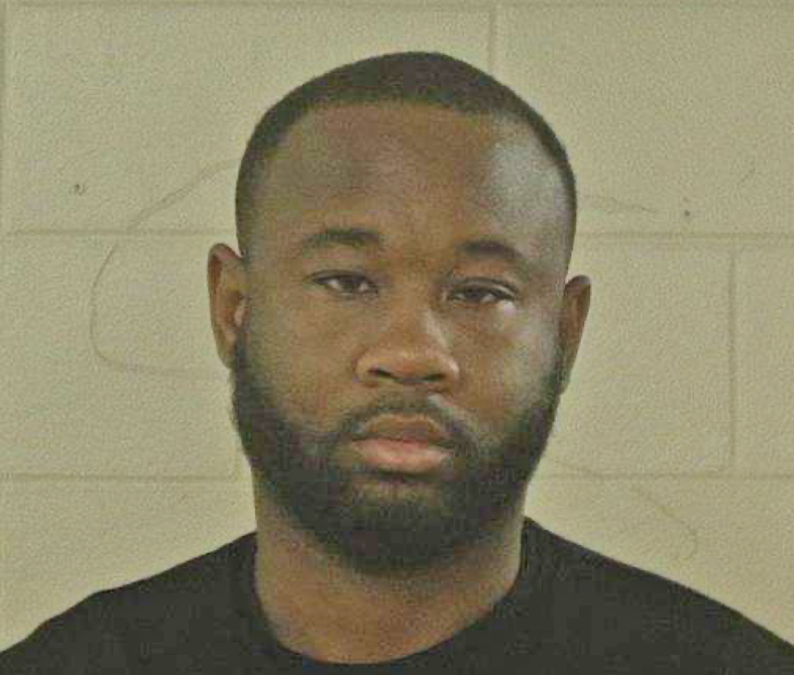
FORT STEWART – A soldier who shot and wounded five people on the base last August and shot at another learned his fate Tuesday afternoon.
U.S. Army Judge Advocate General Col. Gregory Batdorff sentenced Sgt. Quornelius Radford to six life terms in prison with parole. The sentences on two specifications of attempted premeditated murder and four specifications of attempted unpremeditated murder will run consecutively.
Last week, Col. Batdorff found Radford guilty of shooting and wounding five people, including four soldiers and a civilian, who was Radford’s fiancée, on August 6, 2025.
He will serve his sentence at the U.S. Disciplinary Barracks at Fort Leavenworth, Kansas.
“Today’s life sentence reflects the profound betrayal at the heart of this case,” said Maj. Matthew Fields, prosecutor with the Army Office of Special Trial Counsel’s Second Circuit. “Soldiers are trained to face danger from the enemy, not from those standing beside them in formation. Sgt. Radford turned his weapon on his own unit, shooting fellow soldiers, including members of his leadership, shattering the trust that is essential to every military organization. His actions left victims with devastating physical injuries, emotional trauma and scars that will endure for a lifetime.
“This sentence recognizes not only the immense suffering inflicted on the victims and their families, but also the extraordinary breach of trust that struck at the core of military service. This sentence makes clear that those who turn on their fellow service members and violate that trust will face severe and lasting consequences.”
Col. Batdorff, who deliberated on the sentence for about two hours and 15 minutes, said the four sentences for unpremeditated attempted murder were upgraded from their normal parameters.
Lead defense counsel Capt. Amanda Perry read a statement from Sgt. Radford, who did not address the court during the sentence other than to acknowledge he had been notified of his rights to appeal.
“I wish I could go back to erase that day, but I can’t,” hie statement read. “I’m glad they didn’t die. I’m truly sorry. I’m getting the help I need. Please forgive me for my actions.”
Lt. Col. Steven Dray, assistant counsel for the government’s case, implored Judge Batdorff to impose life without the possibility of parole for Radford.
“This court martial is charged with delivering a sentence that supports justice and maintains discipline across the force,” he said.
Lt. Col. Dray said Radford went into his unit’s leadership area that morning, smiled at them, addressed his superiors and started shooting with his personal handgun.
Lt. Col. Dray said that during the trial and the testimony from witnesses, the court didn’t “smell the gun smoke and didn’t hear the moans of those he tried to kill.” Radford was a NCO who tried to kill his bosses, Lt. Col. Dray said, and that showed a “complete and utter lack of discipline.”
Radford also held on to grudges and was unpredictable, Lt. Col. Dray said, and that Radford, according to Smith’s testimony, was hoping to get shot and killed as a result of his attack. His shooting of his fellow soldiers also rendered that unit “combat ineffective” as a result of the physical and emotional trauma.
Lt. Col. Dray asked for the maximum penalty on three principles – that the sentence reflect the seriousness of Radford’s actions, that it serve to deter others and that it protects society.
“It took a literal hero to stop Sgt. Radford,” he said.
Capt. Perry agreed Radford’s crimes merited a significant punishment but argued he should not serve life in prison without the possibility of parole.
“Sgt. Radford accepts responsibility for the harm he caused,” she said.
Capt. Perry also pointed out that Radford told the MPs to “just kill me” upon his capture.
“He had reached a point of profound helplessness. He believed death was the only way out of his misery,” she said.
Radford told other soldiers to go home, Capt. Perry added, and even told a friend in a phone call before the shooting that “this will be the last time you hear my voice.”
“Nothing in his record shows he cultivated these violent tendencies,” she said. “The evidence points to a man who had reached his breaking point and accepts responsibility for his actions.
In imposing his sentence, Col. Batdorff said the victims sustained physical, mental, emotional and psychological injuries because of Radford, and his use of his position and trust as a noncommissioned officer allowed him access to his victims. Radford also brought his own weapon illegally onto Fort Stewart and concealed it and in doing so, showed a detailed plan of action, Col. Batdorff added.
Col. Batdorff said he also upgraded the sentence based on the status of Raekwon Smith as Radford’s fiancee and as a good Samaritan who tried to stop Radford.
“He callously shot him in the chest to remove him as an obstacle to his plan,” Col. Batdorff said.
Smith had followed Radford onto the base from their Hinesville apartment. As Smith sat in his vehicle, Radford approached him and shot him in the chest.
Radford, at the time assigned to A Company, 703rd Brigade Support Battalion of the 3rd Infantry Division’s 2nd Armored Brigade Combat Team, then went into his company offices and shot four other soldiers and shot at another.
Other soldiers finally confronted and subdued Radford until military police arrived.
Radford’s grandmother Joanne Mitchell testified Tuesday on Radford’s character, telling the court he was the kind of person who “would give you the shirt off his back.” She also said Radford had been taking care of his sister’s two daughters after his sister was killed a year ago by a drunk driver.
“He has gone through so many family members passing,” she said.
Radford pled guilty March 31 to one specification of domestic violence, one specification of aggravated assault with a dangerous weapon and four specifications of aggravated assault by inflicting grievous bodily harm.
He was sentenced to 10 years each on seven other charges, including six for aggravated assault, but those sentences were dismissed, pending the attempted murder sentences surviving an appellate review.