Ross Williams, Georgia Recorder
This week, citizen scientists throughout the southeast region will take 15 minutes to help make a headcount of the buzzing, scuttling little critters that help our flowers bloom and gardens grow.
The counting is part of the University of Georgia’s Great Southeast Pollinator Census. The event, which takes place this Friday and Saturday, started eight years ago in Georgia and is now also open to residents of South Carolina, North Carolina, Florida, Alabama and Mississippi.
You can learn how to participate at the Great Southeastern Pollinator Census website. Last year, more than 27,000 participants logged more than 500,000 insects.
Becky Griffin, a pollinator health associate for the University of Georgia Extension and mastermind behind the count, said participants don’t need any special knowledge of bugs or plants.
“It has caught on, and it’s even caught on to people or groups that you would not think of as insect conservation people, like the Daughters of the American Revolution and the Georgia Aquarium,” she said.
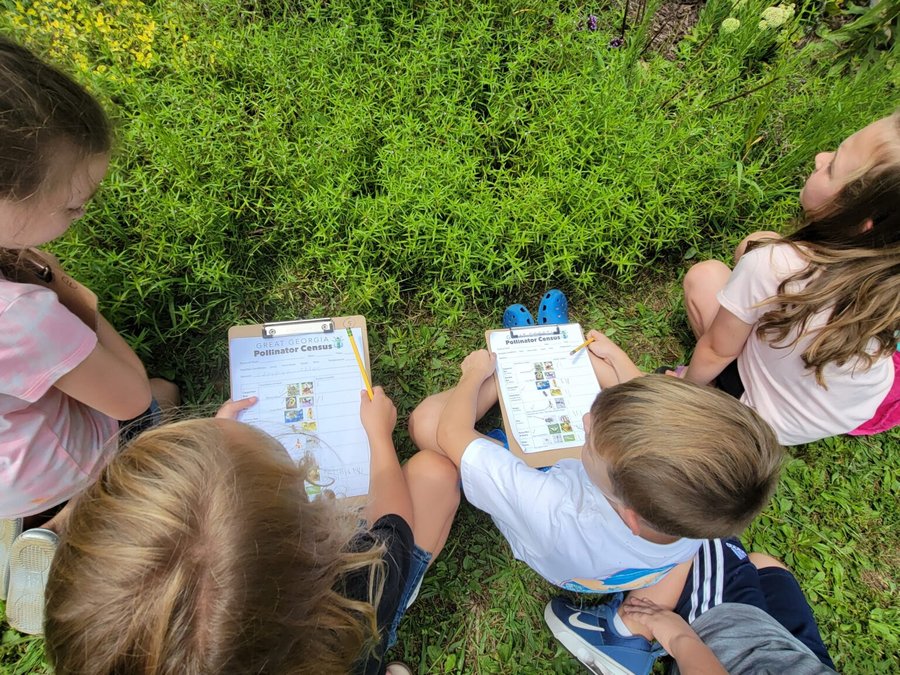
Nearly 600 schools participated in last year’s count, including Blue Ridge Elementary School in Fannin County, where STEM teacher Tori Arp leads the count for pre-K to fifth grade students.
Arp said she took part for the first time in 2020 and the lessons are always a hit with the kids.
“It’s a great time when we come back to school because the kids want to be outside,” she said. “There are a ton of things blooming at the time still, and the pollinators are really active.”
Arp has the youngest students make little honeybees out of pipe cleaners and simulate pollinating flowers using colorful chalk as pollen. They also learn what she called a “little waggle dance” to simulate how bees communicate.
“And then as I get up to fourth and fifth grade, we do the parts of the flower dissection to understand about how the flowers are fertilized and the role of the pollinator in the ecosystem, things like that,“ she said.
Another early adopter for the bug count is master gardener Tim Mullen, who tends a garden attached to Slow Pour Brewing Company in Lawrenceville.
In addition to hosting events for the brewery, he garden there is formally certified by UGA as an educational demonstration garden and regularly hosts educational events, including the pollinator census.
Mullen, a retired teacher with a background in environmental protection, said people often join the count after inadvertently wandering over to the tent.
“People come to drink a beer, and we’re sitting there with our UGA master gardener tent, and they say, ‘What are you – what is this?’ They have no idea what we’re doing,” he said “When was the last time you were in a class learning something you enjoyed, sitting down at a table and having a beer?” he added with a laugh. “You can’t drink beer at school, but we can here.”
Griffin said the count represents a fun time for participants, but it’s also important for the state’s economy. In 2023, Gov. Brian Kemp issued an official commendation praising the census’ contribution to the agriculture industry.
Griffin said pollinators contribute $600 million to the state’s agriculture industry, and that farmers, developers and local governments use the data to help them decide what plants they should grow.
“They’re looking at, if I’m a watermelon grower in Peach County, what kind of insects are people finding in Peach County, and do I need to add pollinator habitat to my farm to make sure that we have the kind of pollinators I need?” she said.
“So it’s not just a feelgood project,” she added. “We want to make sure our plants survive, but it’s also an economic issue as well.”
This year’s count is dedicated to Walter Reeves, an expert Georgia gardener who died this year after a decades-long career offering advice on TV, radio and print.