Lucille Lannigan, Growth and Development Reporter
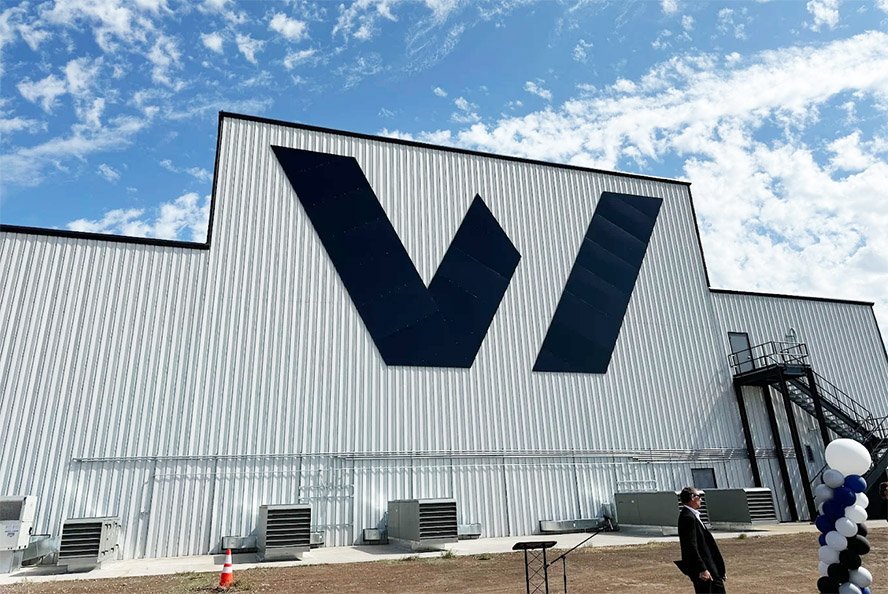
RICHMOND HILL – Westwin Elements is not coming to Bryan County, and an environmental review of the former Caesarstone property that it was looking to locate to, came back clean.
Bryan County Attorney Aaron Kappler gave this update during the Bryan County Commissioner’s August meeting, Tuesday. Bryan County and the City of Richmond Hill launched an investigation in February after concerns were raised about contamination and hazardous waste at the property. The investigation, which was conducted by an environmental consultant firm based in Atlanta, found no evidence of contamination that would constitute a public nuisance.
“Westwin’s contentions of course were therefore unsubstantiated and false,” he said.
This investigation launched after Kayleigh Long, the CEO of Westwin Elements, a metal refining company, that sought out Richmond Hill as a future home for its nickel refinery, claimed during a public meeting that Westwin would clean up the former Caesarstone property after barrels containing hazardous waste and elevated levels of contamination were found.
Testing of groundwater wells, during the investigation, repeatedly detected elevated arsenic in one well. However, Kappler said state regulators and the independent environmental consultant determined the arsenic was consistent with naturally occurring levels in the region. Testing of four wells by the independent environmental firm found the other three wells below the Environmental Protection Division's applicable limit, with no other metals detected above regulatory standards.
Caesarstone also cooperated with the investigation and removed drums and other containers from the site through an environmental disposal company.
The Georgia EPD ultimately determined the property would not be listed as a hazardous site. Kappler said Caesarstone did receive administrative violations related to hazardous-waste recordkeeping and notification requirements, but those violations were closed without further action.
“The rule as a public nuisance is to determine if the property itself causes harm to the public … is it environmentally contagious, contaminated, etc.,” he said. “Based on everything we know, based on the fact that the water is fine, there wasn't an arsenic leak at the sewage dump site, based on the wells being installed, the water being tested, my conclusion is that there is no public nuisance on the site. The site is not contaminated.”
The City of Richmond Hill also confirmed during a June meeting that its zoning does not permit metallurgy. Kappler said Westwin is no longer under contract to purchase the property and has stopped negotiations with Caesarstone, which is now negotiating with another party.
“Short version is: Westwin is not going to be here,” Kapler said.
Bryan County Chairman Carter Infinger also addressed concerns about potential data centers in Bryan County. Kappler said data centers are not a permitted land use under the county's Unified Development Ordinance (UDO) in unincorporated Bryan County. Because the UDO is a permissive ordinance, he said uses not specifically allowed are prohibited.
Changing the UDO would require a public process, including Planning and Zoning Commission review, multiple readings before the County Commission and public hearings. Kappler said the process would generally take 60 days or longer.
“That doesn’t apply to incorporated limits,” Kappler said. “The cities have their own zoning ordinances, their own development procedures, and they can do what they want.”
Infinger said the county had been receiving requests for a moratorium to be placed on data center development.
“We don’t need to do a moratorium because we don’t allow it anyway,” he said.