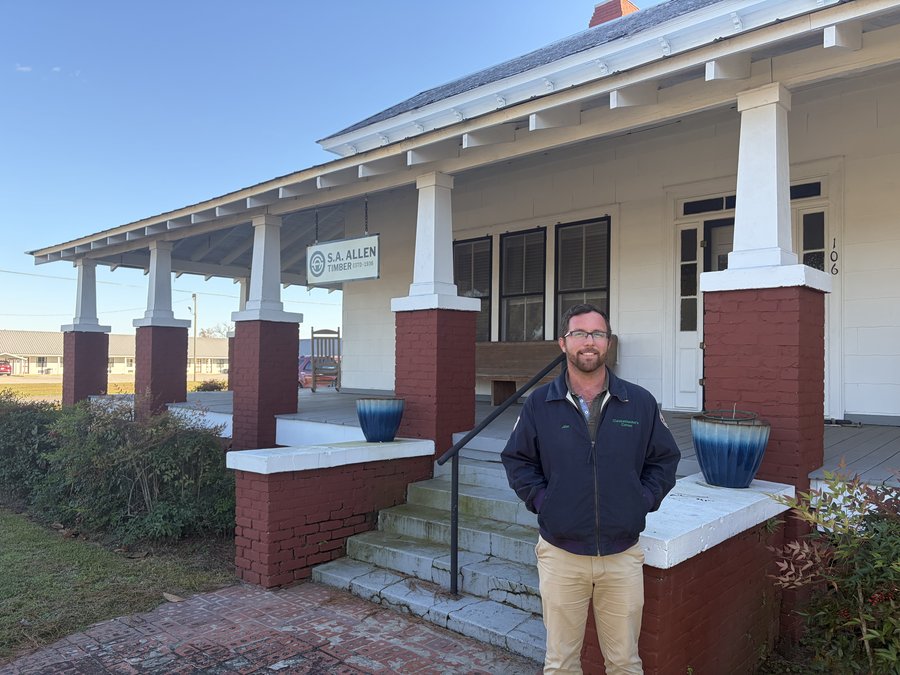
ELLABELL – “If you live in the country long enough, the city will come to you.” Hunter Bumgarner kept his grandmother's words in mind as he and his wife searched for a forever home to raise a family in.
Five years ago, they settled on North Bryan County for its good schools and the rural lifestyle they both grew up with. They bought a house on an acre off US-280, where there's room to breathe away from Savannah and Pooler and where a chance encounter with a neighbor at the mailbox can turn into a 10-minute conversation.
Now, as development spreads across the county's northern half, Bumgarner and other residents wonder how much longer that version of home will exist.
“We're here for the long haul – whatever this part of the county ends up looking like in 10 to 15 years,” he said. “I know growth is inevitable, but I just hope they do it smartly.”
On Nov. 10, Bumgarner spoke before Bryan County commissioners in opposition to a proposed development that would rezone about 35 acres from agricultural use for commercial space and eventually 270 multifamily apartments along US-280.
Nearby residents raised concerns about traffic on already-strained roads and about whether the development would fit the character of their neighborhoods.
In November, Bryan County commissioners saw a slew of rezoning requests to allow for commercial and residential developments along US-80 and US-280. Major industrial projects were also presented to the County’s Planning and Zoning Commission.
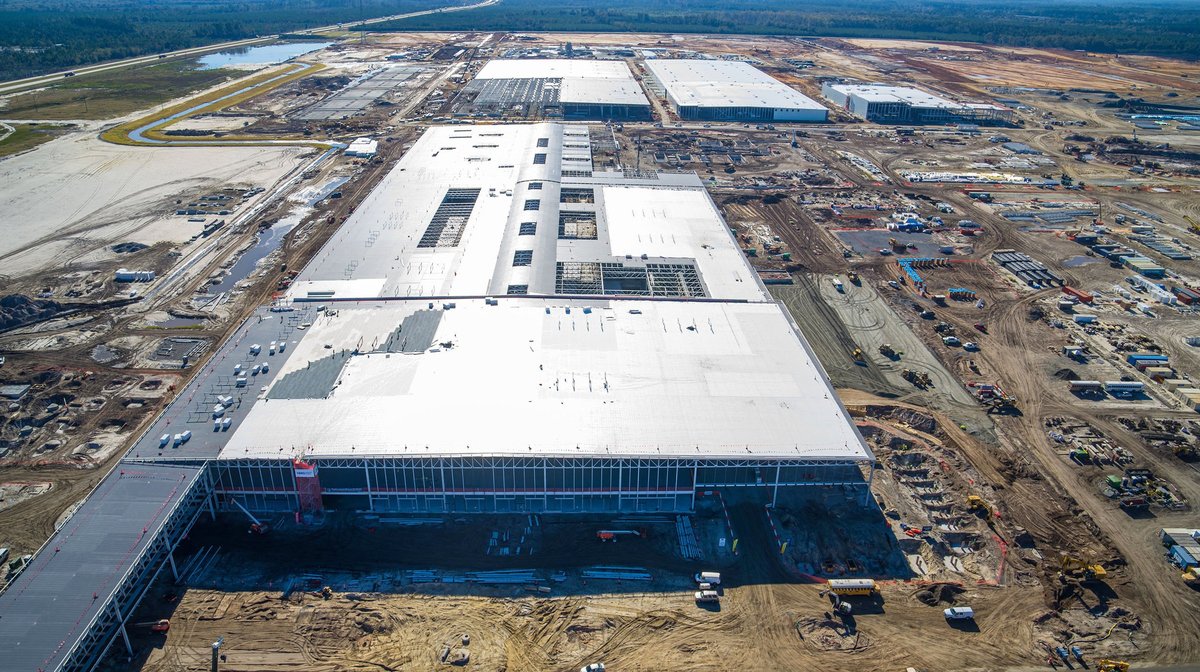
These requests are just a splatter of the explosion of growth in North Bryan County, since Hyundai Motor Group Metaplant America broke ground in Ellabell in 2022. Suppliers, warehouses and supporting businesses have followed, along with the need to house the plant's projected 10,000 workers.
The investment brings jobs and economic opportunity, but also puts pressure on the county's natural resources, infrastructure and communities. For residents like Bumgarner, who chose the area for its rural character, the question is whether the community they call home will remain recognizable.
A community confronting growth
For District 1 Bryan County Commissioner Alex Floyd, those concerns are personal.
His family established itself in Pembroke in 1906. Sitting on the porch of a historic home on Pembroke’s Main Street, Floyd can point to buildings throughout town and recall the families who lived and worked there.
He’s seen a lot of change come to North Bryan, but believes the heart of the community has largely stayed the same – and that county leaders have a responsibility to make decisions with residents in mind.
“It's the people's county, and they are gracious enough to let us run it for them, not the other way around,” he said.
Floyd described HMGMA's site as a ticking time bomb. Its location along I-16, about 30 miles from the Port of Savannah, made it unlikely the property would remain untouched forever.
Still, the project's scale surprised residents.
“I don’t think anyone thought we'd be running dogs and digging crawdads on it forever,” he said. “But still, we had nothing like it, and nobody around here had ever experienced anything like that.”
Concerns about the 2,900-acre development, largely centered around water. The plant requires nearly 7 million gallons daily. This thirst for water, currently met by groundwater wells in Bulloch County, is set to be quenched by a regional project that supplies treated surface water from the Savannah River.
Bryan County just announced that it’s 85% finished with the nearly 3-mile water main extension along I-16 that will make this possible.
The HMGMA experience prompted Floyd to run for county commission and put residents on alert for what development might come next.
“I don't think people were paying attention before, then suddenly everybody was like, ‘If it can happen to them, it can happen to us,’” he said.
Since 2021, county commissioners have rezoned more than 1,500 acres from agricultural to industrial use.
Among the projects now underway or in development:
● Ridgeway Logistics Park: A 335-acre industrial park in Ellabell, where land clearing began in June.
● Black Creek Commerce Center: A $70 million project expected to bring nearly 700,000 square feet of industrial space seven miles from HMGMA. Site preparation began in November.
2.1 million square feet of warehousing along US-80, between Bryan and Bulloch counties – awaits approval from the county.
And another nearly 1.2 million square feet of warehousing from Blitchton-Bryan Oaks LLC is proposed for US-80 as well.
Residential and commercial proposals are following the industrial growth. Blitchton Village, a proposed development, would bring 267 multifamily rental units to about 66 acres along US-80 and Queens Way. Another proposal at US-80 and Eldora Road includes 45 acres of commercial development, with a potential 600 residential units requiring a separate approval.
There’s a flurry of road construction along and off I-16 as well to provide more access points for all this development. Not to mention the interstate’s planned widening project.
Environmental organizations, like The Ogeechee Riverkeeper, are raising concerns about potential environmental impacts of development, especially industrial and warehousing, to the wetlands, waterways, and groundwater that make up the area.
The Environmental Cost
Damon Mullis, who has led the Ogeechee Riverkeeper for nine years, said the nonprofit once tracked two or three major development proposals annually in Bryan County. Now, that number can come in a single month.
This has significant implications for the area’s wetlands, as Mullis said – it’s hard to find a parcel of undeveloped land out there that doesn’t have wetlands on it.
A new Federal rule could also put Georgia’s wetlands at greater risk as the U.S. Environmental Protection Agency and Army Corps of Engineers proposed a rule in September that would shrink the definition of wetlands.
Mullis said clearing trees and filling wetlands changes how water moves through the landscape, potentially increasing flooding and affecting groundwater connections. Construction can also send sediment into nearby waterways, like North Bryan’s Black Creek, during heavy rainfall.
As development adds rooftops, roads and parking lots, stormwater management becomes increasingly important. Mullis said retention ponds can help, but they can’t prevent development from changing the area's natural hydrology.
Water supply and wastewater treatment are additional concerns as industry and population increase. Bryan County's wastewater facility discharges treated water into the Ogeechee River. Mullis said the Riverkeeper has not observed negative impacts downstream but continues monitoring water quality.
Mullis said the Riverkeeper isn't opposed to development but wants stronger environmental protections, including limits on wetland impacts and better stormwater and wastewater controls.
“We're not anti-growth, we're anti-bad growth,” he said.
Pembroke harnesses growth while maintaining its character.
While growth brings environmental and infrastructure challenges, it also presents economic opportunities for communities like Pembroke.
Mayor Tiffany Ziegler, whose family has lived in the region for five to six generations, wants to ensure the city benefits from the investment without losing its identity.
She remembers hearing stories of a once-thriving Pembroke, where local businesses provided jobs and young people had reasons to stay. Traveling through other small Georgia towns that have struggled to maintain their downtowns and economies has sparked a determination in her.
“It breaks my heart because they've lost that legacy of who they were created to be, and I don't want that for the city of Pembroke,” she said. “My goal is to make sure it's a thriving environment for our families that live here once again.”
She said HMGMA and its suppliers bring new opportunities to residents in a city where the median per capita income was about $30,306 in 2024, according to Census data.
Ziegler said jobs paying an average of about $54,000 can offer families more than a paycheck, providing access to health insurance, retirement benefits and greater financial stability.
Her own 22-year-old son was able to get a job at HMGMA after commuting to Gulf Stream right after tech school.
“He's able to stay right here in the community, only traveling 11 miles for work, making a good living wage right here at home,” she said.
That’s the kind of success story Pembroke wants to harness as Ellabell continues to grow. However, Pembroke's preparation for growth in North Bryan began well before Hyundai arrived.
From 2013 to 2015, the city participated in the Georgia Initiative for Community Housing, a three-year program that helped officials assess housing needs and develop a long-term plan. The effort laid the groundwork for affordable housing developments such as Sawmill Landing and Ash Branch Manor.
The city also updated development requirements to preserve neighborhood character, including architectural standards for higher-density housing like brick or hardy plank siding, sidewalks and requirements that large planned developments preserve 20% of their land for conservation or green space.
“We didn't want that traditional cookie-cutter final box that you see in other communities,” Ziegler said. “The developer comes in, they're going to build, and they're going to leave. But we're going to be here long term. We knew we wanted to protect the integrity of our community.”
Pembroke is now participating in its GICH senior year focused on improving an existing neighborhood through housing rehabilitation, infrastructure upgrades and new development.
The city is also expanding its water and sewer capacity, including a new wastewater treatment facility expected to add about 500,000 gallons per day. Officials are evaluating longer-term water needs as development moves closer to the I-16 and US-280 corridor. City Administrator Chris Benson said Pembroke might look into tapping into the Savannah River surface water pipeline in the future.
He said Pembroke is currently on the periphery of the growth in Ellabell. Ziegler agrees but said she notices small changes – unfamiliar faces in the grocery store or school hallways in a town where historically, everyone knew everyone.
“We’re seeing more and more people move in … increased traffic, but it’s still the same small town environment where when things happen, people come together.
For Ziegler, the goal is to make sure growth creates opportunities without sacrificing this community culture.
Growth with the community in mind
Floyd said he understands why North Bryan residents are uneasy about growth. At the Nov. 10 commission meeting, he listened as homeowners described concerns about traffic, safety and the changing character of their neighborhoods.
Greg Miles, a Bryan County resident of 30 years who lives across the highway from one proposed development, said his concern extends beyond a single project to the precedent it could set.
He pointed to the changing appearance of US-280, where industrial buildings and new road infrastructure have altered what was once a rural landscape.
“There's a difference between planning for growth and surrendering to growth,” Miles said to commissioners. “Every approval shapes what residents will see and live with for the next 50 years.”
Bumgarner and other residents also called for road improvements before additional development is approved.
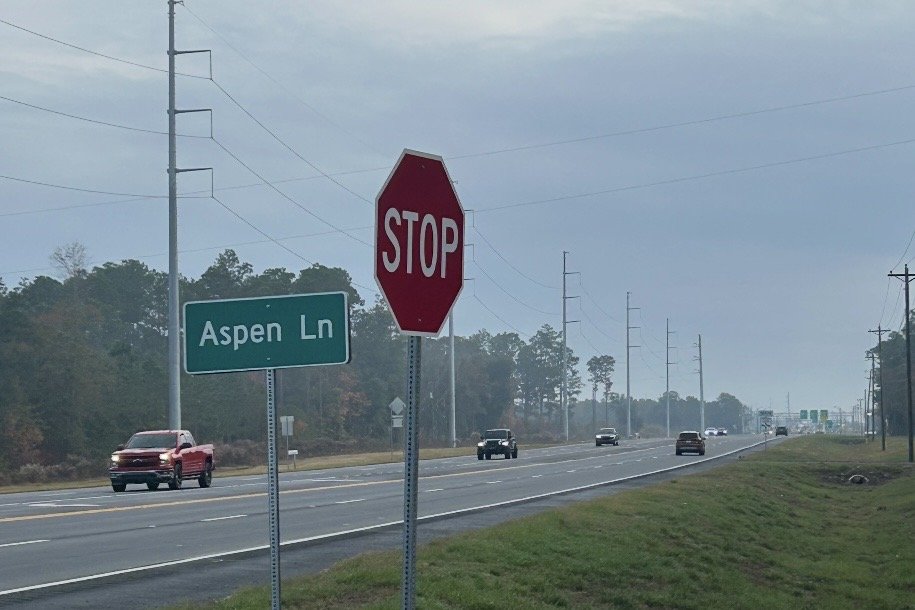
One concern is the growing traffic on US-280, where Bumgarner has asked officials to consider a dedicated right-turn lane into his Aspen Lane neighborhood. He said drivers slowing to turn off the highway have faced dangerous situations when impatient motorists attempt to pass.
Floyd shared those concerns about a proposed 270-unit apartment complex, particularly the prospect of an influx of additional vehicles on the roads,
Commissioners rejected the residential component of the proposal in November.
Floyd said not all development is bad development for Bryan County.
Warehouses, he said, for example, generally require less water and sewer capacity and bring tax revenue without placing the same demands on schools as large residential developments.
But he said the county cannot expect to accommodate every kind of development without making choices about how land is used and facing residents who have become increasingly more vocal about demanding accountability from developers and local officials.
“You can't just flip people's lives over and expect them to shut up and leave you,” he said.
As someone whose family has called Pembroke home for more than a century, Floyd has watched the community change before. He remembers when the town was a regional center for working families and when its streets were filled with the trucks that supported the timber industry.
He said he doesn't expect North Bryan to return to that version of itself. Nor does he believe growth can or should be stopped.
But he isn't convinced the area will lose its identity, either. People fear what they don't know, he said, and the community will have to adapt together. Floyd has never wanted to live anywhere other than Pembroke and North Bryan County
“You've got to love it,” Floyd said. “If you love it, it'll love you back.”
Lucille Lannigan is a Growth and Development reporter for Morris Multimedia.