Story by Lucille Lannigan, reporter
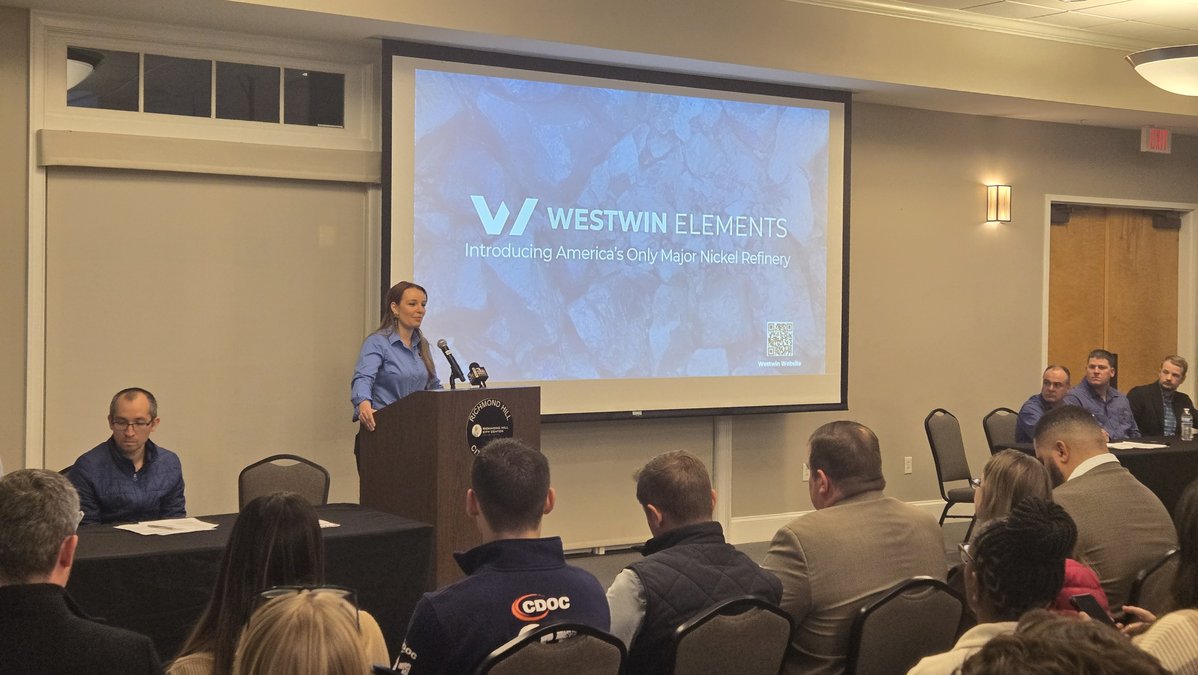
A proposed nickel refinery planned for Richmond Hill will likely move forward, Westwin Elements CEO KaLeigh Long said during a town hall meeting Monday night.
The Oklahoma-based nickel refining company, hosted the public meeting at the Richmond Hill City Center to present information about the project and address questions related to environmental impact, health and safety, and economic benefits. Nearly 300 people attended, filling the main room and overflow areas.
The meeting followed growing opposition to the proposal after a Jan. 13 Bryan County Commission meeting, where Westwin presented commissioners with 3,000 signatures of local support. Though, Long decreased this number to 1,879 signatures from Bryan County residents during the town hall meeting. The company has since filed a defamation lawsuit against the Bryan County Board of Commissioners related to public statements from Chairman Carter Infinger opposing the project.
Long acknowledged community concerns but emphasized Westwin’s commitment to transparency and engagement. She said Richmond Hill was selected largely because of the availability of the former Caesarstone facility in an industrial park along Belfast Keller Road, calling it well-suited for nickel refining.
“Is this a done deal? No, it isn’t. It likely will be done though,” Long said. “It is private property. We want to buy it. We would like to also earn support of the community. We would like to hire from this community and hire locals here.”
Long said Westwin plans to retrofit the existing plant rather than build a new facility and would clean up hazardous materials left behind by previous operations. She confirmed the company has received an incentive offer from the Bryan County Development Authority but declined to provide details due to a nondisclosure agreement. Discussions with local officials began in June of 2025 and state officials began as early as 2023, she said.
The Development Authority of Bryan County, however, disputes Westwin’s claim that the Authority has offered any incentive to the company. In a recent Facebook post, the Authority issued a statement that read the DABC is listening to the public’s concerns about Westwin Elements. The statement read that all votes to grant incentives to business must be done in a public meeting, and the DABC “does not see it appropriate to vote on the issuance of … incentives to Westwin Elements.”
Long emphasized the strategic importance of nickel, which she described as critical to national security and currently dominated by foreign supply chains. The Richmond Hill facility, she said, would be the first major nickel refinery in the United States.
John McNee, a Richmond Hill resident who works to install powerlines across the country, said he welcomes an American company as part of a broader effort to bring manufacturing back to American soil.
“Everybody complains that everything's outsourced anyway,” McNee said. “I'm tired of it. I mean, literally really like, you can go and buy American flags that say "Made in China.”
He also said he is attracted to the idea of better paying jobs for his neighbors.
One of Long’s key arguments for Westwin was the company’s promise of entry level jobs that will pay upwards of $90,000. She repeatedly mentioned that Bryan County residents were struggling with low pay to afford expenses. She said one of Westwin’s missions was to solve these local financial challenges.
McNee said he has worked across the country, including in New Mexico, New Jersey, New York, Pennsylvania, Florida, and Georgia, often spending long periods away from his family.
“If I can make $100,000 a year five miles from my house, why would I ever want to leave my kids again?” he said. “That’s what’s important to me.”
Still, environmental and health and safety concerns have been top of mind for coastal Georgia residents learning about the nickel refinery.
Damon Mullis, Riverkeeper and Executive Director of the Ogeechee Riverkeeper, an environmental organization, wrote in a statement that the facility’s processes will involve many dangerous chemicals and heavy metals.
“We also know that the proposed site is close to saltmarsh, waterways, and a populated area,” the statement read. “Because of the facts we do know, we believe the proposed facility is a threat to the local waterways and communities and urge the Richmond Hill City Council, Bryan County Board of Commissioners, and Development Authority of Bryan County to do everything they can to deter this refinery from locating in our community."
Long said the refinery would use nickel carbonyl technology with more than 120 years of safe operation at sites outside of the U.S. and would operate as a closed-loop system with minimal environmental impact. She said the company voluntarily submits to third-party environmental monitoring and would allow continuous air, water, and soil testing.
Still, public commenters grew agitated as Long answered questions. Several people stood and asked further questions about potential disasters like hurricanes and how the housing and school developments within five miles of the proposed nickel refinery would be impacted if Westwin’s claimed disaster precautions failed.
Residents raised concerns about property values, about the transportation of waste or hazardous materials from the nickel refinery. Long confirmed that 23,000 gallons of wastewater from feed preparation would be trucked to third-party treatment facilities, a revelation that received loud scoffs from the public.
Bryan County resident Kathy Grymes criticized the company’s early outreach efforts, saying she was approached to sign a pro-project petition in a retail parking lot without receiving clear information.
“If you're all about transparency, why did we find out about this in a Goodwill and Dollar Tree parking lot?” Grymes said to Long during the town hall. “Why did you do this presentation before? Why weren't you up front about coming to us?”
Grymes said she found the town hall informative, but it didn’t change her distrust of Westwin Elements.
“I still can't trust them because of the way that I found out about who they were,” she said. “I feel like they’re still not admitting the fact that it’s already done. They’ve said it in a number of ways: ‘we’re already here.”