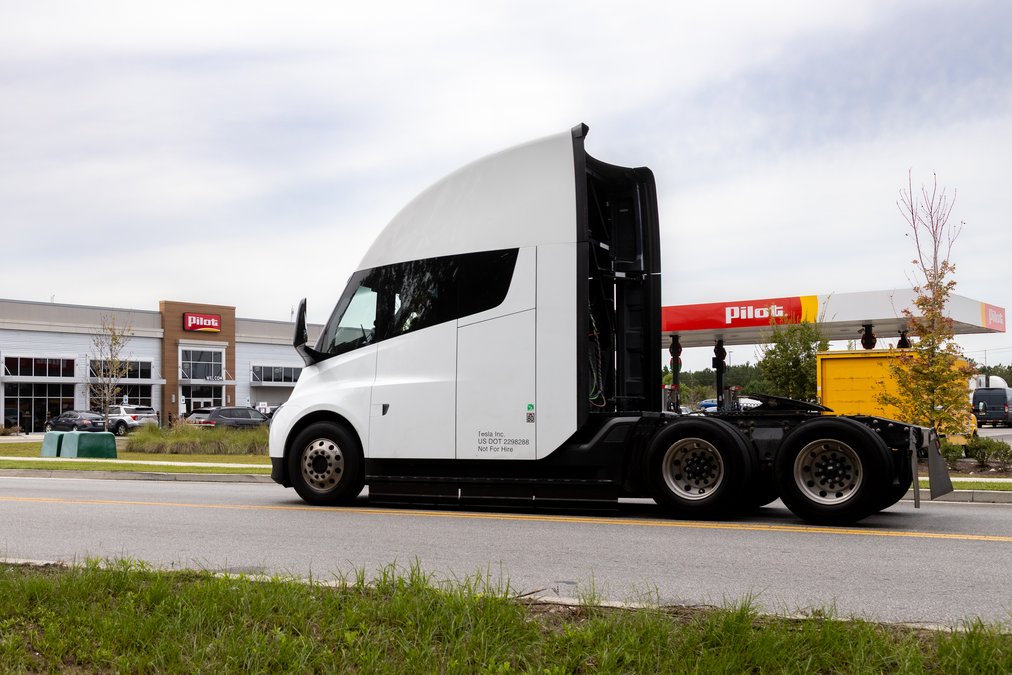
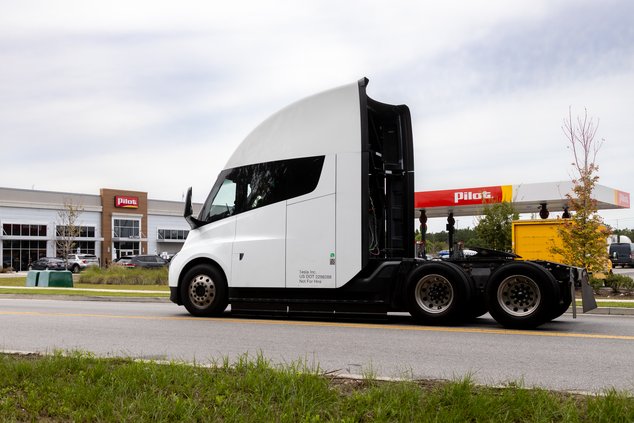

ELLABELL – A look at one possible future of American trucking was on display Oct. 8 at the Pilot Travel Center at the busy I-16 and Highway 280 interchange in North Bryan.
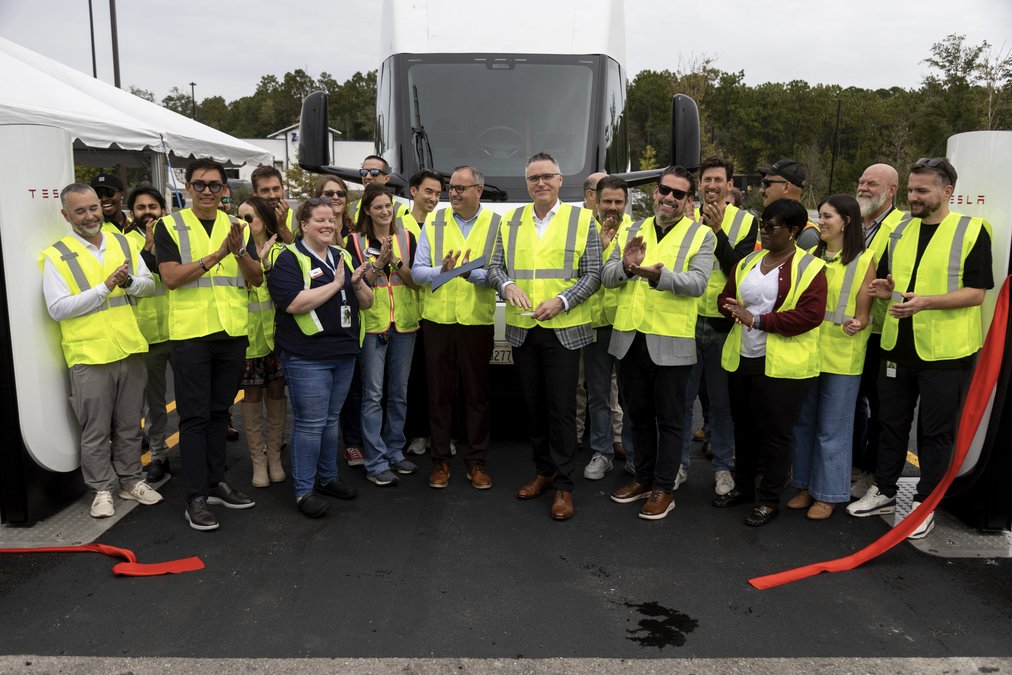
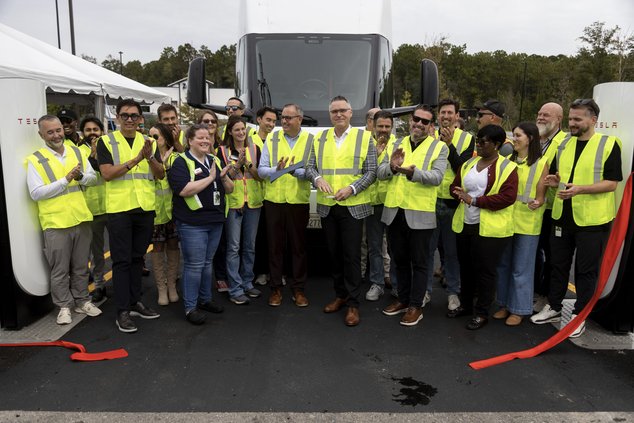
There, at a busy truck stop barely two years old, representatives from Pilot and electric vehicle manufacturer Tesla gathered for a ribbon cutting to open six heavy-duty charging posts, marking the first such location opened as a result of a partnership by the two companies.
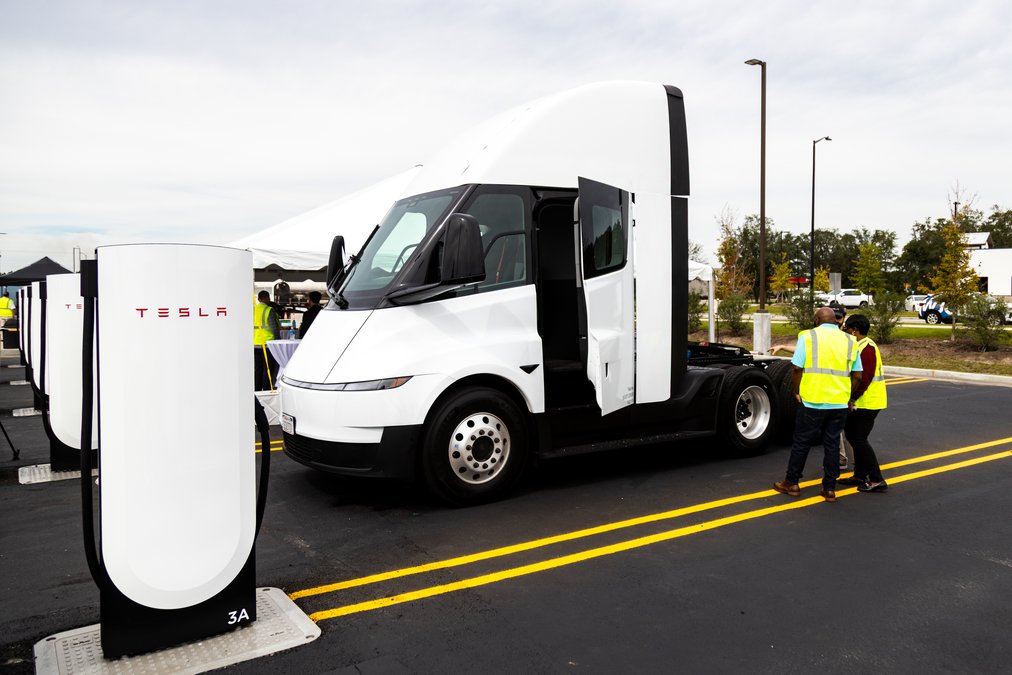
The posts, each capable of delivering up to 1.2 megawatts of power, can charge the batteries on an electric semi up to 80 percent full in half an hour, according to officials with both companies.
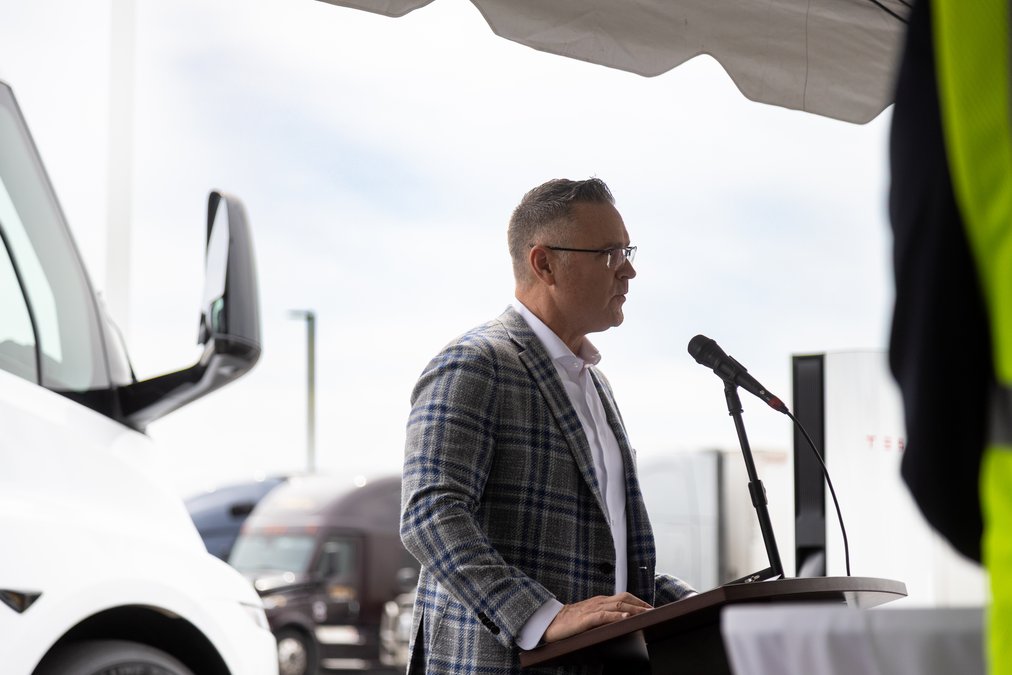
“This site represents far more than just a new charging location,” Shannon Sturgil, vice president of alternative fuel for Pilot, said. “It’s an investment in the infrastructure that will help support the future of freight movement in the United States.”
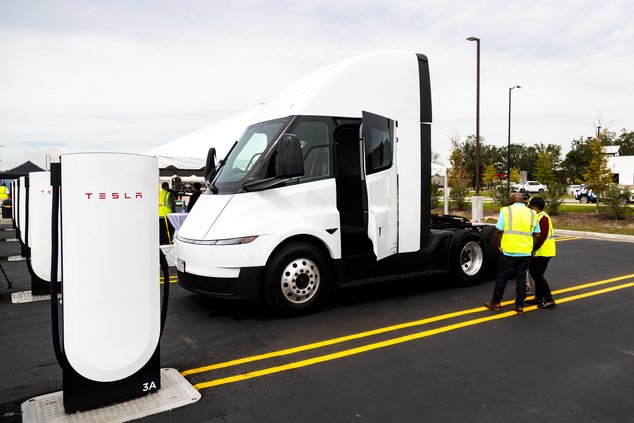
Two semi cabs, each a gleaming white, were on display at the ceremony, according to Jason Gies, a member of Tesla’s semi team. One semi had a range of 325 miles, the other 500 miles.
The two giant EVs came out of a recently opened 1.7 million square foot manufacturing facility in Sparks, Nevada, capable of turning out 50,000 such trucks a year.
“We are going to be putting semis all over the United States,” Gies said, adding that “this is just the beginning folks.”
He said Tesla, which opened a charging station in Atlanta on Oct. 7, will have 100 such posts in the U.S. by the end of this year. The company intends to have 700 in 2027, Gies said.
Strugil said the partnership with Tesla is part of a broader strategy for Pilot, which has some 900 travel centers across the U.S.
“We know there won’t be a one-size fits all solution for transportation,” he said. “That’s why we’re continuing to invest across our energy portfolio, including traditional fuels, renewable fuels, passenger EV charging and … heavy duty industry charging solutions.”
Various estimates online show electric heavy duty trucks in the U.S. currently account for less than half of one percent of big rigs on the road.