By allowing ads to appear on this site, you support the local businesses who, in turn, support great journalism.
Outgoing Mayor Russ Carpenter reflects on career, shares future plans in Q+A
Russ Carpenter
Russ Carpenter

Jeff Whitten, Correspondent

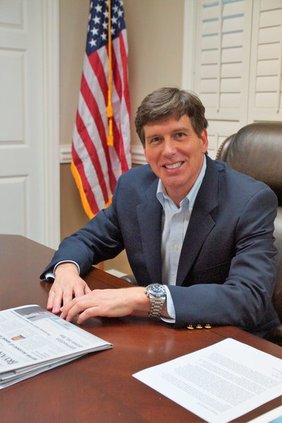
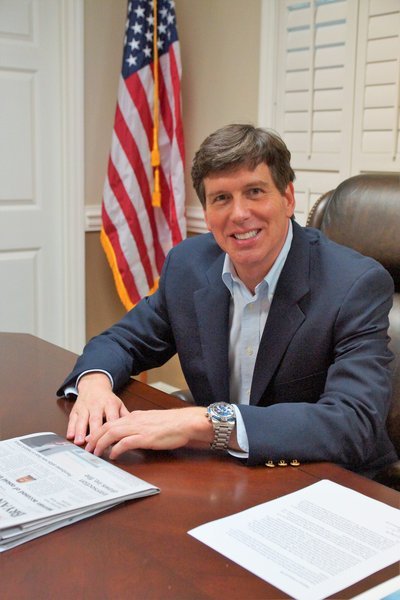
Russ Carpenter will wrap up his second term as mayor of Richmond Hill in a matter of months, ending – at least for now – a career in public service that began in 2009 when the longtime high school government teacher put theory into practice by running a successful mayoral campaign. Carpenter took office in January 2010.

In a recent Q&A, Carpenter responded to questions about his time in local government. The responses have been edited for length and clarity.

Q: First, how long have you taught school and how long have you served in local government.

A: I’ve taught school, mostly U.S. Government, for 26 years, the last 23 at Richmond Hill High School. I’ve served in local government for the last 16 years. Eight on City Council and eight as Mayor.

Q: Why teach government and why decide to run for office?

A: I am blessed to be able to teach government, since I’ve always been interested in every level of government. Federal, state, and local government – if you truly want to make a difference, and change things, it will be through government. It’s not the only way to affect change, though. Churches and charities certainly, do, too, Since my teenage years in Richmond Hill, I’ve been involved in local campaigns, so running for office was something I always considered, although I didn’t run for council until I was 40.

Q: We’re at an age where distrust of government seems prevalent. Is that what you see from your perspective as both teacher and mayor? Is it on the rise? If so, what's causing it and can it be fixed?

 A: The students, mostly, aren’t as distrustful of the government. Maybe they aren’t as jaded as others are, yet. But as Mayor, there is distrust, especially toward the federal government. The divisiveness in D.C. has caused this, I believe. It started about 15-20 years ago. There used to be a sense of collegiality in our government, between the two parties. We had different policies, but didn’t view opponents as the enemy. This is no longer the case. On a local level, aside from elections, it is not as bad.

Q: A lot of things these days tend to get blamed on social media. Is it a problem?

A: I believe social media has amplified the problem with all levels of government.

Q: What’s been the best thing about serving as mayor?

A: The best thing is being able to accomplish certain needed projects – expansion of the parks, better drainage, and expansion of our industrial land, which has brought in thousands of jobs. Many more can live and work in the same city. Another positive would be recognizing the many phenomenal residents that we have in Richmond Hill. So many residents and groups make an exceptional difference in our town every day. Recognizing them has been a priority. Also, some people and groups that might not have had a voice we have been able to bring to the table. I have also been blessed to have dedicated council members. And perhaps most of all, I have been blessed to serve with a great group of local pastors and awesome churches. They stepped up during the flood and during Covid, to say the least.

Q: What’s the worst?

A: The worst thing is the slow pace of government. Many projects take way too long to bring to completion. Roads, parks, and the Community House come to mind. As for the Community House, it is a big project, and it is expensive. We are seeking ways to finance this, such as grants or partnerships. This takes time. Something else that is not great about being Mayor is the perception that the city has ultimate control over what businesses come into the city. I assure you that few on Council get excited about gas stations and dollar stores. But if the property is zoned commercial, it is the land owner who decides what is going to be built. We can, through long range planning, affect this somewhat, but sometimes legally can’t deny someone from developing land within their property rights. Some of these zoning decisions were made decades ago. We can, however, ensure that the design of the building fits our aesthetic goals.

Q: How would you as a teacher grade your performance as mayor?

A: How would I grade my performance as mayor? This is a good question, although a tough one. I’m critical of myself sometimes. Overall, I’d say a B+. The first term was better than the second, when we had to deal with so many things out of our control, such as flooding rivers. Through more stringent sign and building requirements, we have made progress in the overall look of the Hill. An emphasis on white buildings with black trim is coming to fruition, giving the city a certain feel.

Q: What’s been the biggest challenge for you personally and the city during your time in office?

A: Balancing my schedule. Being mayor is a part-time job in theory, but sometimes it is challenging considering I work a full time job. One of the advantages for Mayor-Elect Cox is that she doesn’t work a 9-5. Not that she isn’t busy with her family and other responsibilities.

Q: What does the future hold for you?

A: I will enjoy time working in the yard and out in the boat. My mom is elderly, and spending with her what time she has left is important. Also, traveling with my wife, Jenny. Recently, a friend said that our perception changes when we get married, which I did last year. This is so true. Just being at home with Jenny a little more, instead of at a meeting, or going to a function, is something that I am looking forward to.

Q: What’s your advice for Mayor-Elect Kristi Cox?

A: Pray about an issue, make the decision, and stick to it. Kristi has years of experience on Council, and, before that, running a large non-profit with a large budget. She will be fine, and, I believe, a good mayor. Listen and learn what residents are saying, preferably in person. She’s a talker, like me, so in this she will be great. Build a good relationship with council members, and with federal, state, and other local leaders. The best advice of all: lean on your relationship with God.

Q: You’re almost a rarity these days in that you were born and raised here. Compare Richmond Hill now to what it was like when you were a kid. Do you ever miss what it was?

A: Richmond Hill, whether you have been here all your life, or just a short time, is growing and changing. I can remember when there were no grocery stores, no fast food restaurants, and very few sit-down restaurants. One bank, and lots of dirt roads, including Harris Trail. We were elated when the first fast-food restaurant opened – the Dairy Queen, then, later a McDonalds. The traffic was better, but you had to go to town (Savannah) for most everything. We had dynamic churches, then, and still do. Do I miss it like it was? Yes, sometimes, but that’s a moot point. Somehow, at least to me, we still have a small town feel, such as going to Friday night football games, or eating at a local restaurant or the drugstore, where everyone knows you, or going to the 4th of July celebration at the park. All of this is what makes us what we are -- a blessed little city in a great state in an exceptional country.

Whitten is a correspondent with the Bryan County News.

Sign up for our E-Newsletters