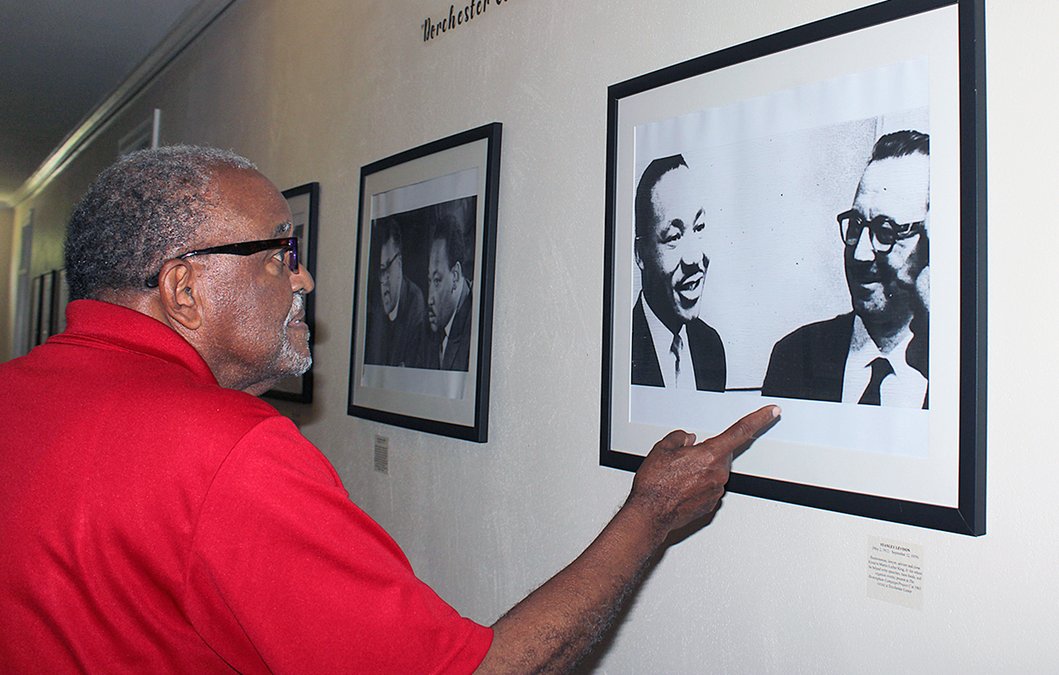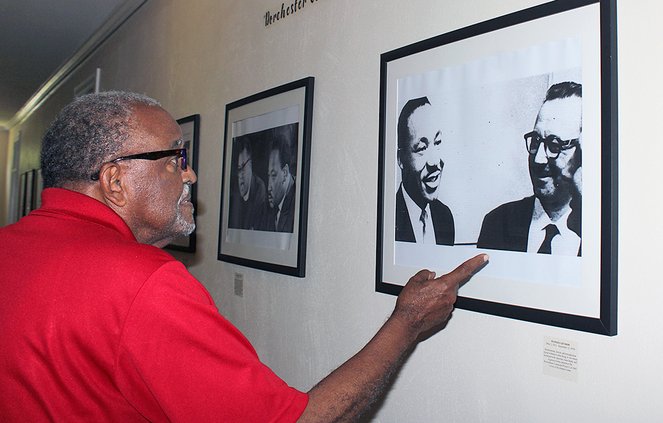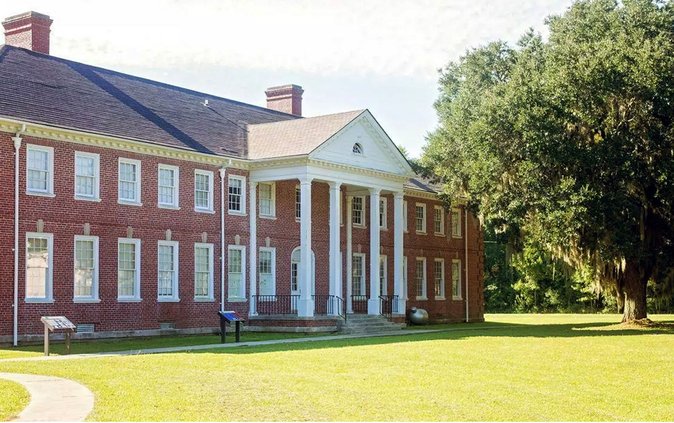
As a child, Kay Flowers Johnson knew of the Dorchester Academy. What she didn’t know was its place in American history.
On Sunday, Johnson’s documentary on the legacy of Dorchester Academy will have its premiere at the Liberty County Performing Arts Center, with a tour of Dorchester to follow.
The documentary, which runs about 40 minutes, “means the world” to Johnson, she acknowledged.
“It’s an honor to have this opportunity to tell this story and highlight this unique place and people,” she said.
Her connection to Dorchester Academy goes back to her early days, before she learned of its importance. Johnson’s mother Nan Flowers, a longtime educator in Liberty County, taught at the then segregated Liberty County High School, and she accompanied her mom on after school and community activities there.
“I knew that Dorchester was the heart of the Black community in that part of the county,” she said. “I knew there were gatherings and meetings. I knew of Dorchester as a community center.”
But Johnson wasn’t fully aware of Dorchester’s place in the civil rights movement and the citizenship education program that occurred there in the 1960s. Johnson’s friend Brynn Grant, now the CEO of the Liberty County Development Authority, called her and asked the longtime television journalist if she thought she could get an interview with Andrew Young.
Interview with Rev. Andrew Young
Johnson, who worked at Atlanta’s WXIA-TV for nearly two decades before starting her own production company, asked a former co-worker, who happened to be the documentary film maker for the former United Nations ambassador, mayor of Atlanta and civil rights leader.
“He said, ‘I don’t know, his schedule is really tight,’” Johnson recalled.
Once her friend asked Rev. Young if would like to do an interview about Dorchester Academy, “he lit up,” she said.
What was blocked off as about 20 to 30 minutes in May 2024 with Rev. Young turned into nearly an hour of footage.
“He was so excited,” Johnson said. “You think about all the things he has done and seen and accomplished in 90 years and he said he had never been asked in depth about what went on in Liberty County at Dorchester.”
Through her years in Atlanta TV news, Johnson had interviewed Young many times before. This interview, though, had a much different feel.
“I had interviewed him about other issues but about this, my home county? It was a highlight of my career,” she said.
That talk with Rev. Young started the wheels turning on something bigger and focused on Dorchester.
“We had that golden treasure of that interview and that was the motivation to move forward, to see what we could do with it,” Johnson said.
Grant secured funding, and the Liberty Convention and Visitors Bureau, the Hinesville Area Arts Council and the Liberty County Historical Society also came up with grants and assistance.
Recording the history
Johnson and a crew she often works with came to Liberty County to conduct most of their interviews in March 2025. She got interviews with state Rep. Al Williams, historian Hermina Glass-Hill, Rose Mullice and even Clay Sikes, son of the late Liberty County Sheriff Bobby Sikes.
What Johnson uncovered during her research was how visiting civil rights leaders were treated as they came to Liberty County. When Dr. Martin Luther King Jr. or Rev. Young or some of the other civil rights stalwarts were headed to Liberty County, they got an actual welcoming party at the county line, often headed by Sheriff Sikes, the late Judge Paul Caswell and the late state Sen. Charlie Jones.
“We weren’t perfect - and Rev. Williams says this in the film and nobody was - but there was an atmosphere that was conducive to this incredible movement and program to take place,” Johnson said.
Johnson’s roots in Liberty County go back generations, through her father, the late Sidney Flowers.
“The love of that county was instilled in me at an early age,” she said. “I have carried it with me. Wherever I’ve lived and worked, I’ve always had that strong sense of place and home.”
As she began working on the documentary, Johnson learned more of the citizenship education programs that started at Dorchester Academy, under the auspices of the Southern Christian Leadership Conference. Through those citizenship education classes, young Black adults learned basic reading, writing and math and learned about voting rights. They also were instructed in non-violent protest tactics.
Dorchester Academy, one of just three sites outside of Atlanta on the U.S. Civil Rights Trail in Georgia, served as the headquarters for Dr. King as he planned the 1963 marches to protest segregation and advance the civil rights cause in Birmingham, Alabama.
“And Ambassador Young points this out, that the core of the civil rights movement was non-violent,” Johnson said. “That was the heart of what was being taught at Dorchester. They wanted to show the world, and they did. They planned it at Dorchester and showed the world at Birmingham and as Rev. Young said, all of God’s children deserve to have rights in this country.”
Johnson learned even more about the history of civil rights in Liberty County, which included Blacks voting in elections in the 1940s, and got an edification on the history of Dorchester Academy itself. She and her crew were at the 2025 annual Walk to Dorchester, getting more interviews and background footage.
First to add 12th grade
Dorchester Academy was the first school in the state to go to a 12th grade and before its closure in 1940 was considered one of the best schools in Georgia.
“I had no idea of the history of the actual Dorchester Academy as a school for Black children,” she said. “All of the history of the school itself, from its founding, it’s amazing what was right there off the highway in Midway.”
Johnson also hopes the documentary not only preserves the history of Dorchester and what has transpired there but also hopes it brings forth others to share their stories or their families’ tales handed down through the years.
“There are people in this county who have stories from their families that maybe they don’t realize the significance of them,” Johnson added. “There are people whose grandparents attended Dorchester Academy. But maybe people will come forward now that this is out.”
Johnson started writing the script for the documentary last June and gathered photographs and archival news clips. Her husband Dan edited the footage.
“I want to honor these generations of people with the Dorchester Improvement Association who have kept the story alive and preserved the building and want to see the story shared and the history told,” she said.
The documentary’s screening will be held at 1:30 p.m. Sunday, with a reception and tour of Dorchester to begin at 3 p.m.