Lucille Lannigan, Growth and Development Reporter
EFFINGHAM COUNTY – Effingham County’s OpenAI data center could eventually use enough electricity to power more than 2 million American homes or a major city.
How will the county’s – the region’s – power grid support such a large project?
At 3,200 megawatts of power (3.2 gigawatts), Project Camellia will be among the largest data center projects in the U.S., but it’s just one piece of Georgia’s data center boom. The state now has one of the highest concentrations of data centers in the U.S. To meet their staggering energy demands, Georgia is rapidly expanding its power grid, including transmission and natural gas projects in Effingham County.
“We are transforming our system really rapidly,” Jennifer Whitfield, a senior attorney at the Southern Environmental Law Center, said. “This has the potential for real harm for communities. That can be air pollution … the cumulative impact of water withdrawals … backup generators. Those kinds of changes to the way our environment is impacted are the kinds of things that communities really ought to have the seat at the table to be weighing in on.”
Georgia Power’s map of grid expansion projects indicates the utility was preparing for a large-load customer like OpenAI before the data center was announced.
Here are the infrastructure projects that laid the groundwork.
Georgia Power to expand gas plants
Georgia Power and its regulatory body, the Public Service Commission, have been preparing for statewide power grid expansion to support large-load customers, including data centers, since around 2023.
In December 2025, the PSC approved a nearly 10-gigawatt expansion of generating capacity. About 80% of that additional output is expected to support current and future data center demand.
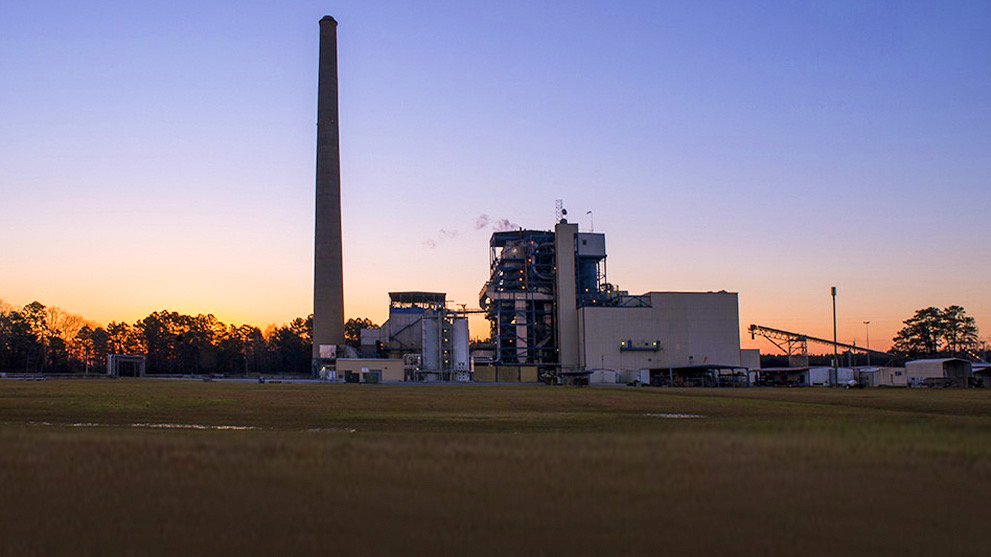
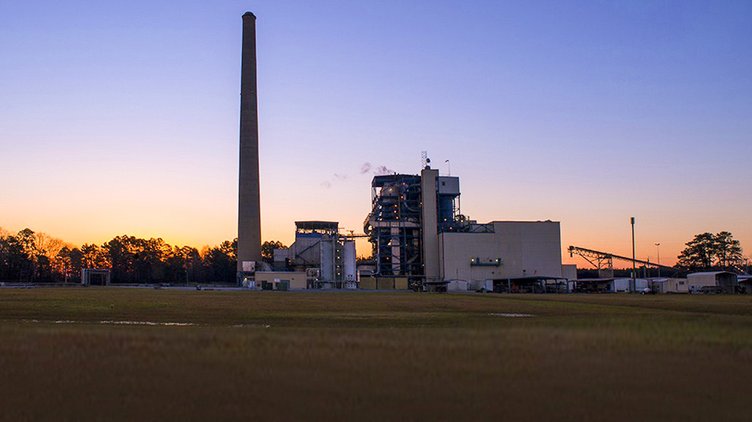
Part of the expansion includes two natural gas plants, including Effingham County's McIntosh Combined Cycle Facility, which was the state’s fourth-largest carbon dioxide emitter in 2022.
The plant currently burns methane gas and oil, generating more than 1,000 megawatts. In December 2025, the PSC approved an expansion adding one combined-cycle unit, but Georgia Power applied to the Environmental Protection Division for an air permit covering two units.
Joshua Peacock, Georgia Power’s communications lead, said permitting an additional unit, which is not currently planned or approved, provides “optionality for future generation to meet the growing demand for capacity resources and reduces the administrative burden of processing separate applications.”
“Right now, they couldn't lawfully build more than one unit at Plant McIntosh,” Whitfield said. “We also know that beginning next year, we expect to see Georgia Power requesting even more energy resources across the state to serve these new data centers, and it would not be a surprise at all to see that second unit at Plant McIntosh be added to that request.”
EPD hosted a public hearing on Aug. 14, marking the end of a public comment period that began July 15. More than 30 people joined the virtual hearing – mostly Effingham County residents and environmental organizations speaking out against a future McIntosh expansion.
Speakers at the hearing raised concerns about the completeness of Georgia Power’s application, its air-quality modeling, the proposed use of oil and the broader environmental and financial effects of adding generating capacity in an area already experiencing rapid industrial growth.
Sharee McKenzie, an Effingham County resident, said she lives off Ebenezer Road where residents in the area have already experienced problems involving industrial air quality.
“Who’s protecting the people?” McKenzie said, during the hearing. “Who will have to breathe this air and pay the bills? These new units mean additional emissions into our community. We're told that there are regulations and permit limits, but a permit does not mean zero pollution and compliance with a permit does not guarantee zero harm.”
EPD will take these comments into consideration in their permit decision, which has no set timeline.
Ahmed Saheed, an associate professor in Georgia Tech’s School of Computer Science, said the McIntosh expansion is consistent with what he expects as Georgia adds generation to serve growing data center demand.
A “greener” alternative, he said, would require Georgia to place greater limits on power generation or create incentives for clean energy sources.
“If they are prioritizing speed, the fastest and easiest option for Georgia Power is to build more of what they already know, and that is these dirty fossil fuel resources,” Whitfield said. “It absolutely is possible to expand energy resources in a cleaner and more sustainable way. It just has to be a priority.”
While the McIntosh expansion is related to data center development, electricity generated there won’t necessarily go directly to Project Camellia.
“It wouldn't be accurate to say that Plant McIntosh is going to be powering X data center,” Tom Krause, the public information officer for the PSC, said. “Project expansion at Plant McIntosh is due to data centers coming to Georgia. But it's more holistic rather than any one data center.”
Adding transmission lines
Another Georgia Power project in Effingham County may have a more direct impact on OpenAI. The utility is building about 1,000 miles of new transmission lines statewide, including a new 500 kV Effingham County Substation.
The project will “provide the transmission infrastructure needed to serve a large-load customer while also strengthening the local electric grid in a rapidly growing area,” according to the project site.
Georgia Power said plans are still being developed and specific routes haven’t been finalized. The project timeline says substation survey notifications will be delivered to property owners this summer, with land acquisition activities beginning this fall.
“As with all infrastructure projects, Georgia Power seeks to work collaboratively with property owners and communities,” the company said. “Eminent domain is used only as a last resort after all other options have been exhausted and is involved in less than 1% of our land transactions.”
Georgia Power officials have said that OpenAI will pay the full infrastructure and electric service costs for Project Camellia and will fulfill requirements for long-term energy contracts and include financial assurances. This is in line with updated rules and regulations first approved by the Georgia Public Service Commission (PSC) in January 2025.
Saeed said his biggest concern is how quickly Georgia is adding generation and transmission infrastructure to accommodate large data center loads.
For a load of this magnitude, he said, regulators should require sufficient advance notice and planning to determine how additional capacity will be provided without affecting existing infrastructure or ratepayers.
“That protects the infrastructure, makes sure that we don't have rolling blackouts during a heat wave and also protects ratepayers to make sure that the power bills are affordable,” he said.
Jennifer Broome, an Effingham County resident, who protested OpenAI’s project during its July 23 open house, said she’s still worried about how that much power may strain the electric grid, especially during severe weather events.
“We have a grid right now that can’t support electricity here,” she said. “After hurricanes, we’ve waited seven to 10 days for our electricity to get turned back on.”
OpenAI has agreed to provide up to 1,000 megawatts of “flexible demand response,” meaning it will reduce power use during periods of high demand, according to Georgia Power. Under the 25-year agreement, Georgia Power can reduce energy delivered to the facility at certain times to support grid stability and reliability.
A lack of regulations
Even as Georgia expands its grid to support large-load data centers, experts question whether existing regulations adequately protect ratepayers and communities.
Saeed said Georgia’s data center regulations are far from the strongest in the U.S., despite the state’s rapid growth in the industry. The lack of regulations becomes more concerning, he said, because the long-term viability of data centers and AI companies remains uncertain.
While Georgia Power has put in certain regulations – requiring large-load customers to bear full infrastructure costs upfront and sign minimum 15-year service contracts – it’s still planning large infrastructure expansions based on demand, not current use.
“It's not even about the technology, it's also about the economics of it,” he said. “Will OpenAI be around for 5-10 years, who knows? Look at the history of tech companies and you can be the judge of how many companies that make it that big stay alive for decades. Not that many.”
Whitfield echoed those concerns.
“We've been concerned all along about the approval of massive infrastructure based on projects that have not been backed up by binding contracts or cold hard cash,” Whitfield said. “If we end up building even more power infrastructure to serve it and this project is ultimately built, that's one thing, but if it's not, that's a whole other thing. Now we have air pollution in our backyard and costs on our bill that we really never needed.”
She said while many data center projects, like OpenAI’s, promise to “pay their own way” and not impact utility ratepayers, She pointed to the Plant McIntosh expansion, which she said is “incredibly expensive.”
“There are large buckets of costs the data centers are causing to go up and data centers are not covering those costs,” Whitfield said. “For a Georgia Power customer, this matters tremendously because we're the ones who have to pick up the bill for this stuff.”